
- ATLAS OF WOODS
- Species Data Sheet
- ORIGIN: Amazon
Angelim-vermelho
- Dinizia excelsa
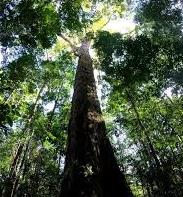
Angelim-vermelho is a large tree species native to the Amazon, whose wood stands out for its high mechanical strength and durability. It is used in heavy structures, bridges and building construction.
Family
Fabaceae
Color
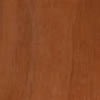
Reddish brown to dark red
Density
0.75 to 0.95 g/cm³ (approximately)
Uses
Heavy structural beams and columns, bridges and engineering works, heavy construction and shipbuilding, railroad ties, piles and foundations, decks and exterior structures, industrial flooring and solid furniture.
Grain
Interlocked
Conservation Passport
- IUCN
- Least Concern (LC) · assessed in 2019
- CITES
- Not listed
- BRAZILIAN RED LIST
- Not on the official list
- LEGISLATION
- Not on the official list of threatened species: harvesting of native trees only under an approved PMFS (sustainable forest management plan) or a clearing permit from the environmental agency, and transport with a DOF (Sinaflor).
About the species
Angelim-vermelho (Dinizia excelsa) is considered one of the largest trees in the Amazon and can reach exceptional dimensions.
It has high economic value and is used mainly in structural applications.
Its wood is extremely strong, comparable to ipê, cumaru and maçaranduba, with very great longevity.
It is a keystone species in the ecological balance of the Amazon rainforest.
In Brazil, the name “angelim” is a commercial/generic name and not strictly a botanical one.
- Common names
Historical and cultural significance
– Angelim-vermelho has significant economic importance in the Amazon region and is widely harvested for the quality of its wood.
– Often called the “giant of the forest,” it is traditionally used in heavy construction, bridges and structural framing.
– Its wood is associated with durability and high mechanical strength.
– Its monumental trees serve as natural and cultural landmarks in Amazonian communities.
– It represents the natural engineering of the tropical forest and is one of the tallest species in South America.
Botanical classification
- DOMAIN
- Eukaryota
- KINGDOM
- Plantae
- DIVISION
- Magnoliophyta
- CLASS
- Magnoliopsida
- ORDER
- Fabales
- FAMILY
- Fabaceae
- GENUS
- Dinizia
- SPECIES
- Dinizia excelsa
Natural distribution

- States of occurrence
- Ecology and habitat
– Biome: prefers terra firme (upland) forests and well-drained soils.
– Habitat: deep, well-drained soils; hot, humid climate.
– Ecology: emergent climax species (forms the upper canopy of the forest).
– Some trees are among the largest in the Amazon.
– Other countries: the Guianas / Venezuela
Tree morphology
- SIZE
-
Angelim-vermelho trees are large and can exceed 50 meters in height. It is one of the tallest, most massive and longest-lived trees in the Amazon.
Bole: Very long, straight and cylindrical, with very high yield.
Root: Very deep and extremely robust.
Buttress roots: Large and well developed at the base.
- BARK
- Reddish brown, thick and fissured.
- CROWN
- Tall, broad, emergent above the forest.
- DBH
- 100 to 200 cm (old trees may exceed this reference).
- LEAVES
- Bipinnately compound, typical of leguminous trees.
- FRUIT
- Large woody pod.
Maturity and harvest
- Timeline · from seed to senescence
Economic harvest · 40 to 60 years
average economic harvest age, which may vary with environmental conditions
Full maturity · Over 50 years
full maturity of the wood occurs at more advanced ages, generally over 50 years
– Angelim-vermelho growth is considered slow to moderate.
– In natural forests, commercial trees are usually very old.
– A typical long-cycle heavy structural timber species.
Wood characteristics
- HEARTWOOD
- Reddish brown to dark red.
- SAPWOOD
- Light and distinct.
- TEXTURE
- Medium to coarse.
- GRAIN
- Interlocked.
- Working properties
– Mechanical strength: high.
– Natural durability: good.
– Drying: slow, requires control.
– Workability: difficult; requires heavy-duty tools.
– Stability: good for a heavy wood.
– Density: Medium to high (approximately 0.75 to 0.95 g/cm³).
– Weight: Very heavy wood.
– Hardness: Very high.
Wood uses
- Uses of the tree
– Ecological function (forest structure)
– Environmental recovery
– Support for wildlife and biodiversity
– Scientific research
Conservation and legislation
– Harvesting permitted only under authorized sustainable forest management.
– Important for the conservation of the Amazon canopy.
– Trade regulated by environmental legislation.
– FSC / CERFLOR certification is recommended.
– Good practice: protection of giant seed trees.
Additional information
– Because of its large size, angelim-vermelho has a high volumetric yield per tree.
– Slow growth: high density and durability, as well as high technical, ecological and commercial value.
– It is one of Brazil’s main natural structural woods.
– A keystone species in the ecological balance of the Amazon rainforest.
– High scientific and ecological importance.