
- ATLAS OF WOODS
- Species Data Sheet
- ORIGIN: Amazon · Atlantic Forest · Cerrado
Ingá
- Inga vera
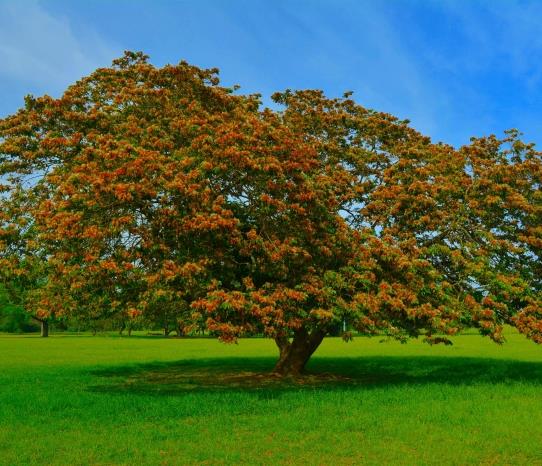
The ingá is a tropical tree widely distributed across the Americas. Its wood is used in light carpentry and rural construction. The species is of great ecological, agricultural and food importance, standing out in agroforestry systems and environmental restoration projects.
Family
Fabaceae
Color
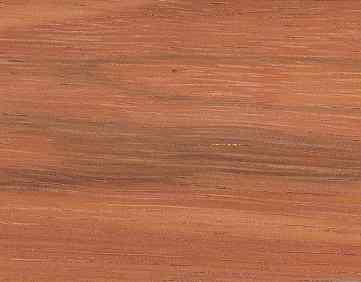
Light brown to yellowish brown
Density
0.55 to 0.75 g/cm³
Uses
Light carpentry, crates, packaging, firewood and charcoal, and simple rural buildings.
Grain
Generally straight
Conservation Passport
- CITES
- Not listed
- BRAZILIAN RED LIST
- Not on the official list
- LEGISLATION
- Not on the official list of threatened species: harvesting of native trees only with an approved PMFS or a vegetation-removal permit from the environmental agency, and transport with a DOF (Sinaflor).
About the species
The ingá (Inga vera) is a tree native to tropical America, belonging to the Fabaceae family (subfamily Mimosoideae).
It is a common species in riparian forests and humid tropical forests, recognized by its elongated fruits, which contain a sweet white pulp eaten by people and animals.
It is of great ecological importance, especially in the restoration of degraded areas and the protection of riverbanks.
The genus Inga includes more than 300 tropical species, many of them important for agroforestry systems and for wildlife.
The species has many common names. The name ingá is of Indigenous origin, derived from Tupi, and refers to the fruits with their sweet white pulp.
- Common names
Historical and cultural significance
– The ingá holds great historical and cultural importance in many regions of Latin America.
– Its fruits are traditionally eaten by Indigenous peoples and rural communities, prized for their sweet, refreshing flavor.
– The species is also used to shade crops, restore degraded soils, in agroforestry systems and as food for wildlife.
– As a member of the legume family, it contributes to biological nitrogen fixation in the soil, improving its fertility.
Botanical classification
- DOMAIN
- Eukaryota
- KINGDOM
- Plantae
- DIVISION
- Magnoliophyta
- CLASS
- Magnoliopsida
- ORDER
- Fabales
- FAMILY
- Fabaceae
- GENUS
- Inga
- SPECIES
- Inga vera
Natural distribution

- States of occurrence
- Ecology and habitat
– Habitat: riverbanks, wetlands, tropical forests and riparian forests.
– Countries of occurrence · South America: Brazil / Argentina / Paraguay / Bolivia / Peru / Colombia / Venezuela
– Countries of occurrence · Central America: Belize / Costa Rica / El Salvador / Guatemala / Honduras / Nicaragua / Panama
– Brazilian biomes: Amazon / Atlantic Forest / Cerrado (mainly in riparian forests)
Tree morphology
- SIZE
- Ingá trees are medium-sized, between 10 and 20 m tall.
- TRUNK
- Straight or slightly crooked, 30 to 50 cm in diameter.
- BARK
- Grayish and relatively smooth.
- LEAVES
- Compound and pinnate, with a few large leaflets.
- FRUIT
-
Long pods containing seeds wrapped in sweet white pulp.
Flowers: White, showy, with numerous long stamens.
Maturity and harvest
- Timeline · from seed to senescence
Economic harvest · 20 to 30 years
economic harvest age
Full maturity · 30 to 45 years
peak wood quality
– The ingá grows relatively fast, especially in humid areas.
– The species is often kept in agroforestry systems because of its ecological importance.
Wood characteristics
- HEARTWOOD
- Light brown to yellowish brown.
- SAPWOOD
- Light beige to pale yellow, moderately distinct.
- TEXTURE
- Medium.
- GRAIN
- Generally straight.
- Working properties
– Workability: moderately easy.
– Natural durability: low to moderate.
– Density: Medium to moderately heavy wood (0.55 to 0.75 g/cm³).
– Classification: It is classified as a common wood because of its medium to low density, lower durability and lower commercial value than noble woods.
Wood uses
- Uses of the tree
– Edible fruit production
– Crop shading
– Agroforestry systems
– Restoration of degraded areas
– Riverbank protection
Conservation and legislation
Additional information
– The ingá is of great ecological importance, contributing to nitrogen fixation in the soil, food for wildlife, improved soil fertility and the restoration of degraded areas.
– Its fruits are eaten by birds, bats, monkeys and other animals, playing an important role in the food web of tropical forests.
– It is an essential species in agroforestry systems and environmental restoration projects.