
- ATLAS OF WOODS
- Species Data Sheet
- ORIGIN: Amazon · Atlantic Forest · Cerrado
Figueira
- Ficus insipida
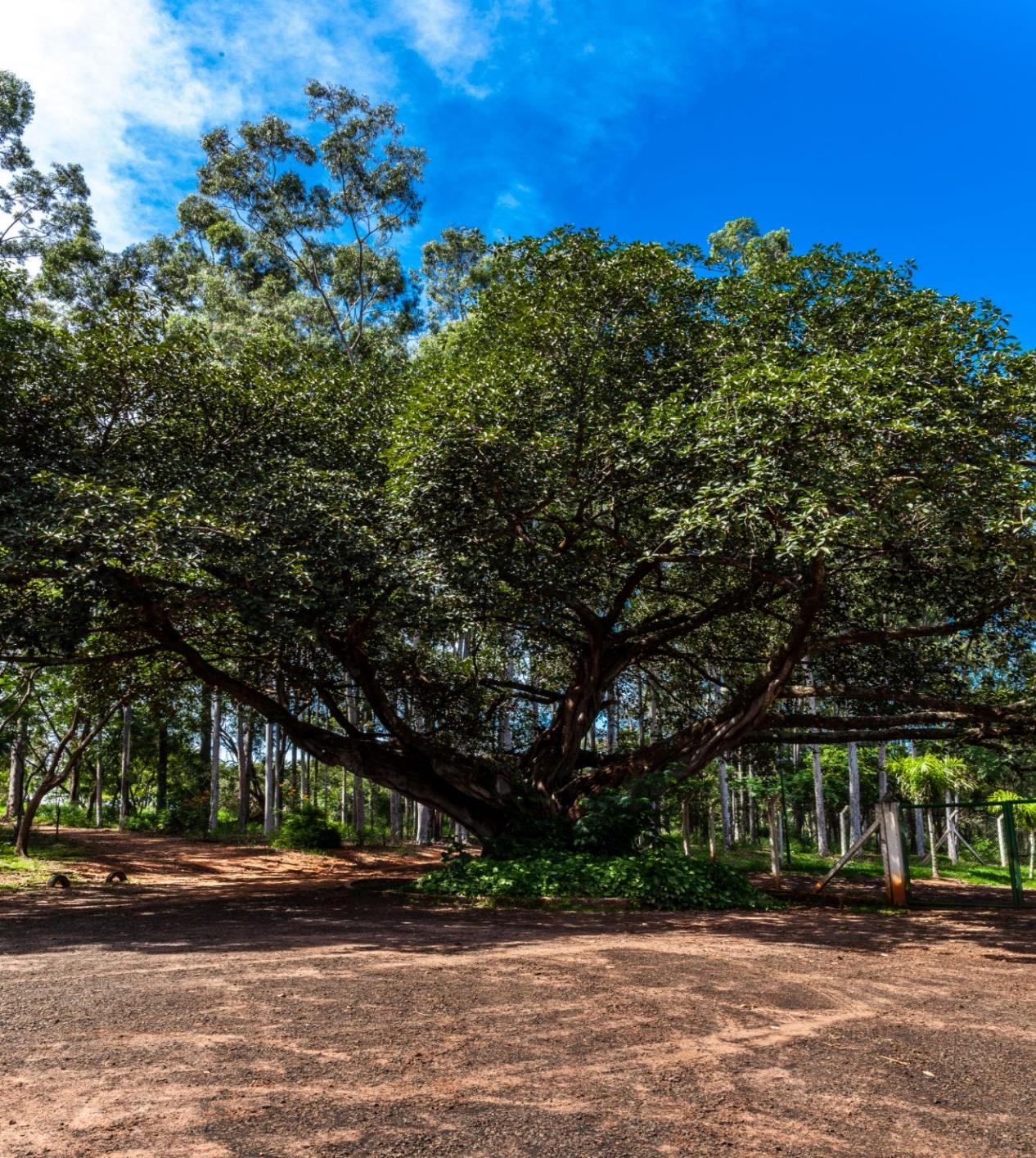
Figueira is a large tropical tree widely distributed across the Americas. Its wood has low to medium density and various applications in light carpentry. Despite its moderate timber value, the species is of great ecological importance, as it provides food and shelter for many wildlife species, helping to maintain biodiversity.

Family
Moraceae
Color
Yellowish white to light brown
Density
0.35 to 0.50 g/cm³
Uses
Crate making, packaging, light carpentry, plywood and simple articles.
Grain
Generally straight
Conservation Passport
- CITES
- Not listed
- BRAZILIAN RED LIST
- Not on the official list
- LEGISLATION
- Not on the official list of threatened species: harvesting of native trees only with an approved PMFS or a clearing authorization from the environmental agency, and transport with a DOF (Sinaflor).

About the species
Figueira (Ficus insipida) is a tropical tree belonging to the family Moraceae, the same family as the mulberry and other fig trees.
It stands out for its tall stature, fast growth and great ecological importance for wildlife.
It produces fruits resembling small figs, which feed many species of birds and mammals.
The genus Ficus includes hundreds of tropical species, many of them known as fig trees and extremely important to the biodiversity of tropical forests.
The species goes by several common names depending on the region. The names generally refer to the fig-like fruits the tree produces.
- Common names
Historical and cultural significance
– Fig trees have historical importance in many tropical cultures.
– In Brazil, species of the genus Ficus are associated with cultural traditions, religious symbolism and spiritual practices in some Afro-Brazilian cultures.
– Rural communities also use parts of the tree for timber, traditional medicine, feeding domestic animals and shading rural areas.
– Ecologically, fig trees are considered keystone species, as their fruits feed many animals throughout the year.
Botanical classification
- DOMAIN
- Eukaryota
- KINGDOM
- Plantae
- DIVISION
- Magnoliophyta
- CLASS
- Magnoliopsida
- ORDER
- Rosales
- FAMILY
- Moraceae
- GENUS
- Ficus
- SPECIES
- Ficus insipida
Natural distribution

- States of occurrence
- Ecology and habitat
– It grows along riverbanks, in humid tropical forests, on fertile soils and in secondary forests.
– Countries of occurrence · South America: Brazil / Mexico / Colombia / Peru / Venezuela / Bolivia
– Countries of occurrence · Central America: Belize / Costa Rica / El Salvador / Guatemala / Honduras / Nicaragua / Panama
– Biomes in Brazil: Amazon / Atlantic Forest / Cerrado (in forested areas)
Tree morphology
- SIZE
- Figueira is a large tree, 20 to 30 m tall, and may exceed that.
- TRUNK
- Robust, often with buttress roots.
- BARK
- Grayish and relatively smooth.
- DBH
- Can exceed 1 m.
- LEAVES
- Simple, large, oval in shape.
- FRUIT
- Small figs produced in large quantities.
Maturity and harvest
- Timeline · from seed to senescence
Economic harvest · 15 to 25 years
economic harvest age
Full maturity · 25 to 35 years
peak wood quality
– Figueira grows relatively fast in tropical environments.
– The species is generally harvested by small producers and is little used on a large scale in the timber industry.
Wood characteristics
- HEARTWOOD
- Yellowish white to light brown.
- SAPWOOD
- White to light cream, not clearly distinct from the heartwood.
- TEXTURE
- Medium to coarse.
- GRAIN
- Generally straight.
- Working properties
– Workability: easy to saw and machine.
– Natural durability: low.
– Density: Light wood (0.35 to 0.50 g/cm³).
– Classification: It is classified as a common wood due to its low density, low durability and moderate to low mechanical strength.
Wood uses
- Uses of the tree
– Shade in rural areas
– Tree planting
– Food for wildlife
– Restoration of degraded areas
Conservation and legislation
Additional information
– Figueira is of great ecological importance in forests: its fruits are eaten by birds, bats, monkeys and other mammals.
– Despite its limited timber value, the species is essential to maintaining biodiversity.