
- ATLAS OF WOODS
- Species Data Sheet
- ORIGIN: Amazon · Atlantic Forest
Marupá
- Simarouba amara
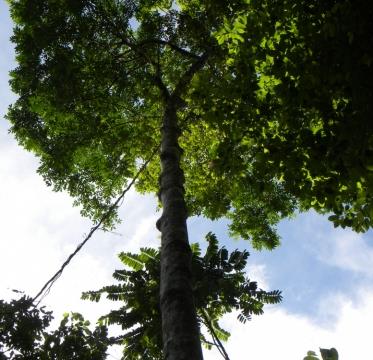
The marupá is a tropical tree widely distributed across the Americas, particularly common in the forests of the Amazon and the Atlantic Forest. Its pale, light, easy-to-work wood has many industrial applications, especially in plywood and carpentry. The species is of great economic and ecological importance.
Family
Simaroubaceae
Color
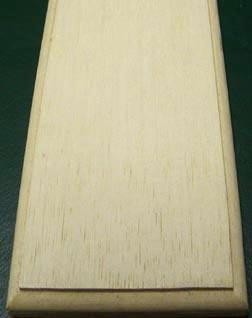
Yellowish white to light cream
Density
0.40 to 0.55 g/cm³
Uses
Plywood, simple furniture, carpentry, boxes and packaging, wood veneers, light construction, and the pulp and paper industry.
Grain
Generally straight
Conservation Passport
- CITES
- Not listed
- BRAZILIAN RED LIST
- Not on the official list
- LEGISLATION
- Not on the official list of threatened species: harvesting of native trees only with an approved PMFS or a vegetation-removal permit from the environmental agency, and transport with a DOF (Sinaflor).
About the species
The marupá (Simarouba amara) is a tropical tree belonging to the Simaroubaceae family.
It is a species native to the tropical forests of the Americas, known for its pale, light wood with good workability, widely used in the timber industry.
It grows relatively fast and is ecologically relevant in forest environments.
The Simaroubaceae family includes tropical species known for their medicinal properties and for their commercially used wood.
The species has several common names depending on the region. These names usually refer to the pale color of the wood or to the species’ traditional use.
- Common names
Historical and cultural significance
– The marupá holds economic and cultural importance in many regions of tropical America.
– Historically, it was used to build light boats, make simple furniture, produce boxes and packaging, and in general carpentry.
– Some parts of the plant are also used in traditional medicine in certain communities.
Botanical classification
- DOMAIN
- Eukaryota
- KINGDOM
- Plantae
- DIVISION
- Magnoliophyta
- CLASS
- Magnoliopsida
- ORDER
- Sapindales
- FAMILY
- Simaroubaceae
- GENUS
- Simarouba
- SPECIES
- Simarouba amara
Natural distribution

- States of occurrence
- Ecology and habitat
– Habitat: humid tropical forests, upland (terra firme) areas and secondary forests.
– Countries of occurrence · South America: Brazil / Peru / Colombia / Venezuela / the Guianas / Bolivia
– Countries of occurrence · Central America: Belize / Costa Rica / El Salvador / Guatemala / Honduras / Nicaragua / Panama
– Biomes in Brazil: Amazon / Atlantic Forest / Some areas of the Cerrado
Tree morphology
- SIZE
- The marupá is a medium to large tree, between 20 and 35 m tall.
- TRUNK
- Straight and cylindrical, 60 to 100 cm in diameter.
- BARK
- Grayish or light brown.
- LEAVES
- Compound and alternate, with several leaflets.
- FRUIT
- Small drupes dispersed by animals.
Maturity and harvest
- Timeline · from seed to senescence
Economic harvest · 15 to 25 years
economic harvest age
Full maturity · 25 to 35 years
peak wood quality
– The marupá grows relatively fast in tropical forests.
– Forest management usually sets a minimum cutting diameter of 40 to 50 cm DBH.
Wood characteristics
- HEARTWOOD
- Yellowish white to light cream.
- SAPWOOD
- White to pale yellow, barely distinct from the heartwood.
- TEXTURE
- Medium to fine.
- GRAIN
- Generally straight.
- Working properties
– Workability: very good.
– Natural durability: low to moderate.
– Marupá wood has characteristics that favor its industrial use.
– Density: Light wood (0.40 to 0.55 g/cm³).
– Classification: It is classified as a common wood because of its relatively low density, lower durability and lower commercial value than noble woods.
Wood uses
- Uses of the tree
– Reforestation
– Restoration of degraded areas
– Urban and landscape tree planting
Conservation and legislation
Additional information
– The marupá is of great economic and ecological importance.
– It stands out for its relatively fast growth, its good adaptation to different environmental conditions and its pale wood with broad industrial application.
– The species is often used in reforestation and environmental restoration programs, helping to maintain biodiversity.