
- ATLAS OF WOODS
- Species Data Sheet
- ORIGIN: Cerrado · Atlantic Forest · Seasonal forests
Amendoim-bravo
- Pterogyne nitens
Amendoim-bravo is a tree native to South America, known for its good-quality wood and its wide use in building construction and joinery. It grows relatively fast and has significant ecological importance, and is also used in environmental restoration projects.

Family
Fabaceae
Color
Light brown to dark brown
Density
0.60 to 0.85 g/cm³
Uses
Building construction, rural structures, furniture, carpentry, flooring, boards and beams.
Grain
Generally straight
Conservation Passport
- CITES
- Not listed
- BRAZILIAN RED LIST
- Not on the official list
- LEGISLATION
- Not on the official list of threatened species: native trees may only be harvested under an approved PMFS or a vegetation-removal authorization from the environmental agency, and transport requires a DOF (Sinaflor).
About the species
Amendoim-bravo (Pterogyne nitens) is a tree species native to South America, belonging to the Fabaceae family.
It stands out for its strong wood, its good adaptation to different environmental conditions and its frequent use in reforestation.
The genus Pterogyne belongs to the group of tropical leguminous trees, characterized by compound leaves and pod- or samara-type fruits.
The species has a wide variety of regional names in Brazil. These names vary with region and local tradition.
- Common names
Historical and cultural significance
– Amendoim-bravo has historical relevance in several regions of Brazil, traditionally used in building construction, furniture making and rural structures.
– Because of the strength of its wood, it became a valued species in carpentry.
– Today it is also widely used in reforestation and environmental restoration projects.
Botanical classification
- DOMAIN
- Eukaryota
- KINGDOM
- Plantae
- DIVISION
- Magnoliophyta
- CLASS
- Magnoliopsida
- ORDER
- Fabales
- FAMILY
- Fabaceae
- GENUS
- Pterogyne
- SPECIES
- Pterogyne nitens
Natural distribution

- States of occurrence
- Ecology and habitat
– It grows in well-drained soils, in tropical and subtropical climates, in open areas and in secondary forests.
– It is considered a pioneer, heliophilous species, common in secondary forests and open areas.
– Countries: Brazil / Argentina / Paraguay / Bolivia
– Biomes in Brazil: Cerrado / Atlantic Forest / Seasonal forests
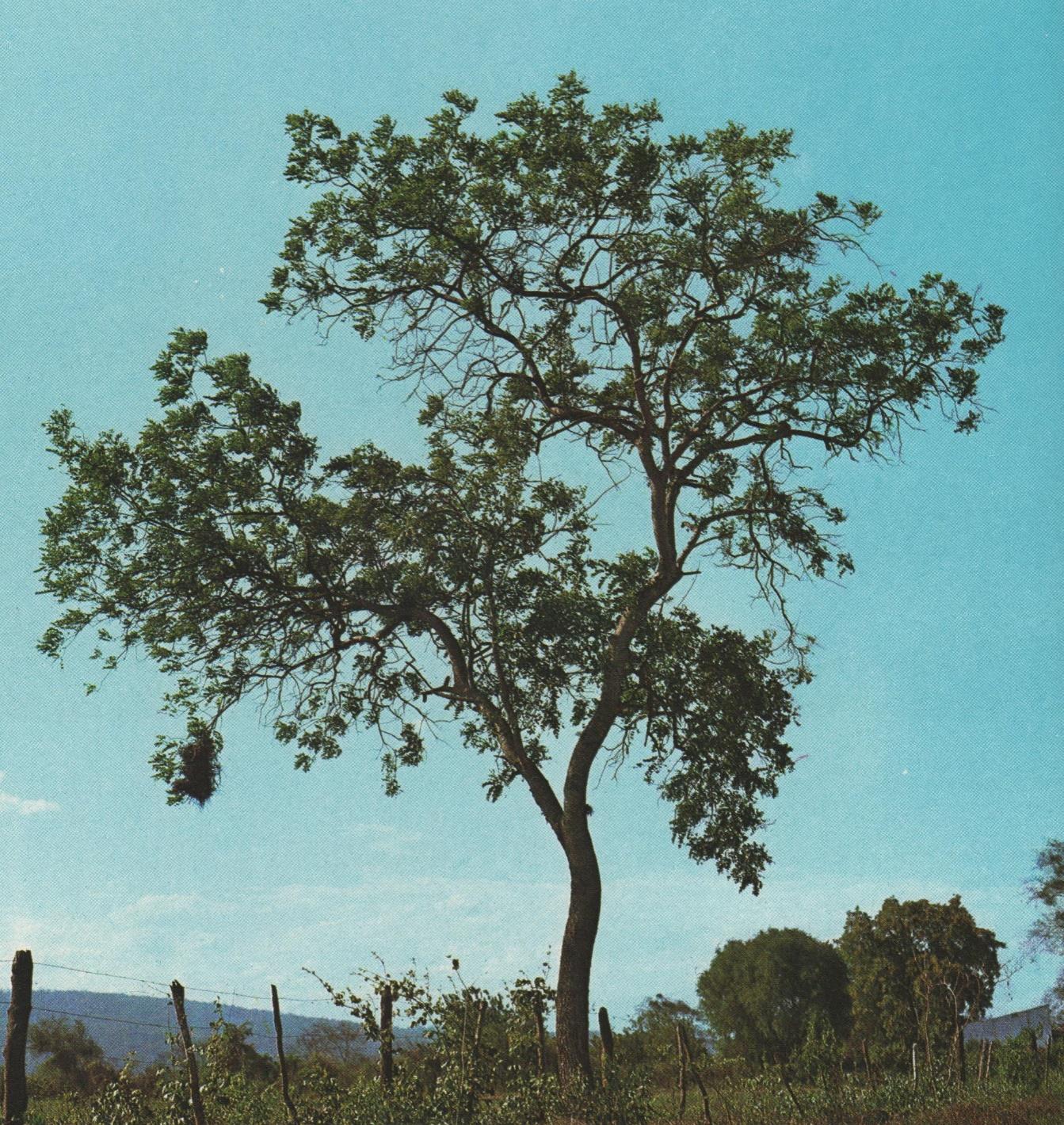
Tree morphology
- SIZE
- Medium-sized, 10 to 20 m tall.
- TRUNK
- Straight and cylindrical.
- BARK
- Grayish to light brown, fissured.
- CROWN
- Irregular and open.
- DBH
- 40 to 70 cm.
- LEAVES
- Compound and alternate.
- FRUIT
- Flattened pods containing seeds.
Maturity and harvest
- Timeline · from seed to senescence
Economic harvest · 20 to 30 years
economic harvest age
Full maturity · 30 to 40 years
peak wood quality
– Amendoim-bravo grows moderately to fast, standing out among many native species.
– In forest management, a minimum cutting diameter is used, generally between 40 and 50 cm DBH. This corresponds to 30 to 40 years of age, depending on environmental conditions and forest management.
Wood characteristics
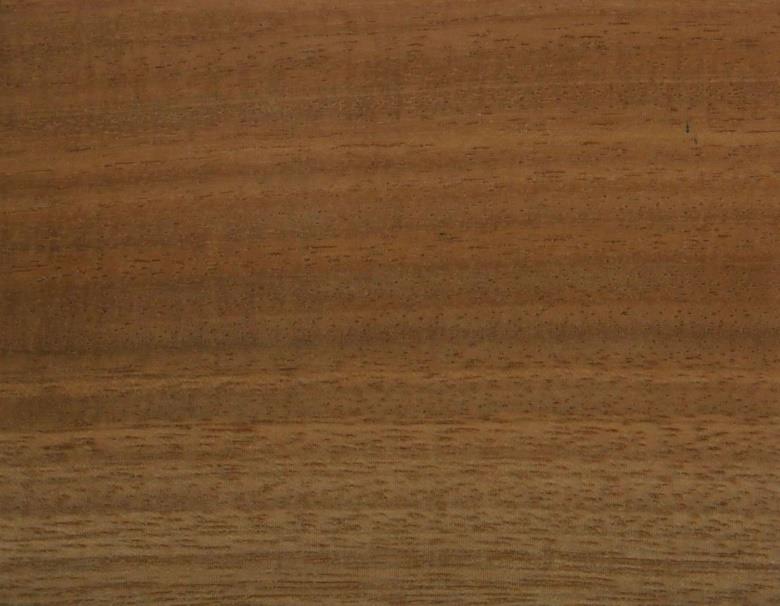
- HEARTWOOD
- Light brown to dark brown.
- SAPWOOD
- Light beige, slightly yellowish and clearly distinct from the heartwood.
- TEXTURE
- Medium.
- GRAIN
- Generally straight.
- Working properties
– Density: Medium to high (0.60 to 0.85 g/cm³).
– Hardness and strength: Hard, strong wood.
– Dimensional stability: Good.
– Workability: Good.
– Gluing and finishing: Easy.
– Resistance to fungi and insects: Good.
– Natural durability: Moderate to high.
– It is classified as a semi-noble wood because of its good mechanical strength, intermediate durability and moderate commercial value.
Wood uses
- Uses of the tree
– Reforestation
– Restoration of degraded areas
– Restoration of riparian forests
– Mixed forest plantations
– Rural and urban tree planting
Conservation and legislation
Additional information
– Amendoim-bravo has great potential for reforestation and timber production, standing out for its relatively fast growth, good adaptation to different soils, and wood with good strength and durability.
– It is a versatile species, with both economic and ecological applications.