
- ATLAS OF WOODS
- Species Data Sheet
- ORIGIN: Amazon
Angelim-pedra
- Hymenolobium spp.
Angelim-pedra is a tree native to the Amazon, recognized for its extremely strong and durable wood. It is widely used in heavy construction and exterior structures, and is one of the main commercial woods of the Amazon region.
Family
Fabaceae
Color
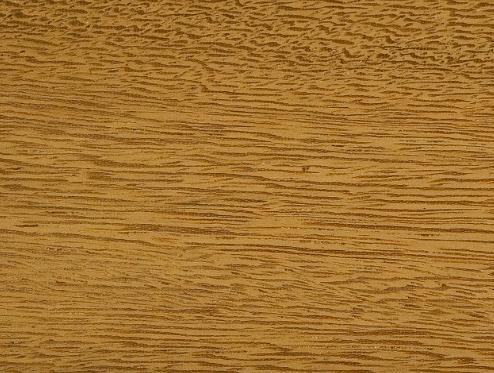
Yellowish brown to dark brown
Density
0.75 to 0.90 g/cm³
Uses
Heavy construction, bridges, exterior structures, beams and columns, railroad ties, piles, flooring, decks and heavy carpentry.
Grain
Generally interlocked
Conservation Passport
- CITES
- Not listed
- BRAZILIAN RED LIST
- Hymenolobium excelsum: Vulnerable (VU). Other species: not listed
- LEGISLATION
- If the wood is H. excelsum (VU on the official list), the threatened-species regime applies: in the Amazon, harvesting only under a PMFS in accordance with IN MMA 1/2015. The other species (e.g., H. petraeum) require an approved PMFS and a DOF.
About the species
Angelim-pedra (Hymenolobium petraeum) is a tree species native to the Amazon rainforest, belonging to the Fabaceae family.
Its wood is recognized for its high mechanical strength, great natural durability and excellent structural performance.
It is widely used in applications that demand high strength and a long service life.
The term “angelim” is generic and can refer to different species, which makes the scientific name essential for accurate identification.
Main species harvested: Hymenolobium petraeum
The genus Hymenolobium includes several tropical trees that produce heavy wood widely used in the Amazon.
Depending on the part of the Amazon, the species may be known by these names. The name “pedra” (stone) refers to the wood’s great hardness.
- Common names
Historical and cultural significance
– Angelim-pedra is of great economic importance in the Amazon and is widely harvested for structural use.
– Traditionally, its wood is used in heavy construction, bridges and infrastructure works, and exterior structures.
– Its strength has made it one of the most widely used species for high-performance applications.
Botanical classification
- DOMAIN
- Eukaryota
- KINGDOM
- Plantae
- DIVISION
- Magnoliophyta
- CLASS
- Magnoliopsida
- ORDER
- Fabales
- FAMILY
- Fabaceae
- GENUS
- Hymenolobium
Natural distribution

- States of occurrence
- Ecology and habitat
– It grows in humid tropical forests, terra firme areas and well-drained soils.
– Countries of occurrence (South America): Brazil / Guyana / Suriname / French Guiana / Venezuela / Colombia / Bolivia / Peru
Tree morphology
- SIZE
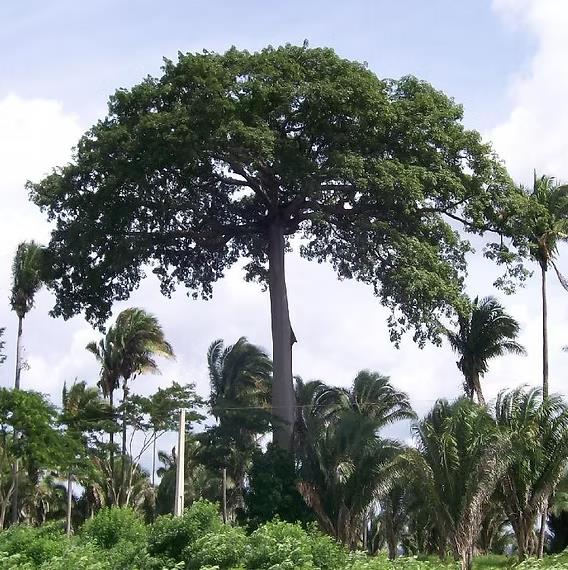
- Large tree, 25 to 45 m tall.
- TRUNK
-
Straight and cylindrical.
Root system: Deep and robust.
- BARK
- Thick and rough, dark brown.
- CROWN
- High and relatively open.
- DBH
- 70 to 120 cm.
- LEAVES
- Compound and alternate.
- FRUIT
- Pods containing seeds.
Maturity and harvest
- Timeline · from seed to senescence
Economic harvest · 50 to 70 years
economic harvest age
Full maturity · 70 to 100 years
peak quality
– Angelim-pedra grows at a moderate rate.
– Forest management is based on a minimum cutting diameter, generally above 60 cm DBH.
– A species suited to medium to long cycles.
Wood characteristics
- HEARTWOOD
- Yellowish brown to dark brown.
- SAPWOOD
- Very pale brown or pale tan, clearly distinct from the heartwood.
- GRAIN
- Generally interlocked.
- Working properties
– Drying: moderate to slow.
– Stability: good.
– Workability: moderate to difficult.
– Natural durability: high (resistant to fungi and insects).
– Density: High (0.75 to 0.90 g/cm³).
– Classification: Heavy, durable structural wood; It is classified as a semi-noble wood because of its high strength and durability, and is widely used in structural applications; In some markets, it may be classified as noble.
Wood uses
- Uses of the tree
– Reforestation (limited use)
– Restoration of forest areas
– Extraction of tannins from the bark
– Traditional medicinal use
– Beekeeping
Conservation and legislation
Additional information
– Angelim-pedra is one of the Amazon’s most important woods for structural use, standing out for its high mechanical strength, high natural durability and superior performance outdoors.
– Because it is a dense, strong wood, it is harder to process: it requires very sharp tools, may need pre-drilling for screws and nails, and drying must be controlled to minimize defects.
– Widely used in reforestation and restoration of degraded areas, production of strong timber, extraction of tannins from the bark, traditional medicinal use and beekeeping.