
- ATLAS OF WOODS
- Species Data Sheet
- ORIGIN: Amazon
Cedrinho
- Erisma uncinatum
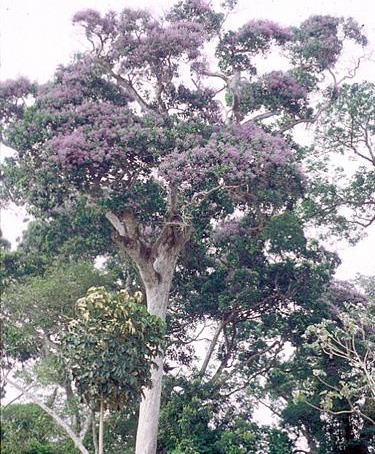
Cedrinho is a tropical tree native to the Amazon, known for the lightness and ease of working of its wood. The wood has an attractive appearance and good workability, and is widely used in furniture, window and door frames and finishes, standing out as an economical alternative to traditional cedar.
Family
Vochysiaceae
Color
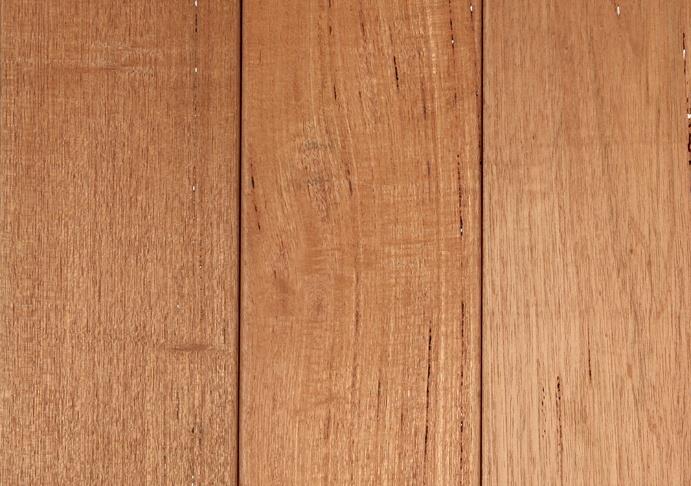
Pinkish to light reddish brown
Density
0.55 to 0.70 g/cm³
Uses
Joinery, furniture, wall paneling, window and door frames, plywood, light construction and interior finishes.
Grain
Usually straight
Conservation Passport
- CITES
- Not listed
- BRAZILIAN RED LIST
- Not on the official list
- LEGISLATION
- Not on the official list of threatened species: harvesting of native trees only with an approved PMFS or a clearing authorization from the environmental agency, and transport with a DOF (Sinaflor).
About the species
Cedrinho is a trade name used in Brazil for different species, depending on the region: Erisma uncinatum (Amazonian cedrinho), Cedrela fissilis (cedro-rosa) and Cedrela odorata (cedro-amargo).
In the Amazonian context and in the tropical timber trade, cedrinho usually refers to Erisma uncinatum.
Erisma uncinatum is a tree species native to the Amazon rainforest, belonging to the Vochysiaceae family.
It stands out for its light wood with good workability, and is widely used in industrial applications.
The Vochysiaceae family includes several important tropical trees of the Amazon.
The species has several regional names. These names relate to the appearance and color of the wood, which resembles cedar.
- Common names
Historical and cultural significance
– Cedrinho has economic importance in the Amazon region and is widely used in the timber industry.
– Traditionally, its wood is used in light carpentry, veneer production and simple furniture making.
– It has a significant presence in Amazonian sawmills.
– Because it is easy to work, it has become a common species in industrial uses, serving as a commercial alternative to true cedar.
– The species also has ecological value as part of the canopy structure (the “roof of crowns”) of tropical forests.
Botanical classification
- DOMAIN
- Eukaryota
- KINGDOM
- Plantae
- DIVISION
- Magnoliophyta
- CLASS
- Magnoliopsida
- ORDER
- Myrtales
- FAMILY
- Vochysiaceae
- GENUS
- Erisma
- SPECIES
- Erisma uncinatum
Natural distribution

- States of occurrence
- Ecology and habitat
– It grows in humid tropical forests, upland (terra firme) areas, hot and humid climates and well-drained soils.
– Countries of occurrence (South America): Brazil / Peru / Colombia / Venezuela
Tree morphology
- SIZE
- Medium to large size, between 20 and 35 m tall.
- TRUNK
- Straight and cylindrical.
- BARK
- Light-colored, with slight fissures.
- CROWN
- High and open.
- DBH
- 50 to 90 cm.
- LEAVES
- Simple.
- FRUIT
- Capsules containing winged seeds.
Maturity and harvest
- Timeline · from seed to senescence
Economic harvest · 20 to 30 years
economic harvest age
Full maturity · 25 to 35 years
peak quality, when mature wood predominates
– Cedrinho grows moderately to fast.
– Forest management sets a minimum cutting diameter, usually between 50 and 60 cm DBH.
Wood characteristics
- HEARTWOOD
- Pinkish to light reddish brown.
- SAPWOOD
- Yellowish or light beige, not very distinct.
- TEXTURE
- Medium.
- GRAIN
- Usually straight.
- Working properties
– Workability: excellent.
– Natural durability: low to moderate.
– Drying: relatively fast.
– Surface finishing: good.
– Density: Low to medium (0.55 to 0.70 g/cm³).
– Classification: It is classified as a semi-noble wood due to its good workability and intermediate commercial value.
Wood uses
- Uses of the tree
– Restoration of forest areas
– Maintenance of Amazonian biodiversity
Conservation and legislation
Additional information
– Cedrinho has great industrial importance.
– It stands out as a good commercial alternative to noble woods.
– Despite its lower natural durability, it is widely used in interior and industrial applications.