
- ATLAS OF WOODS
- Species Data Sheet
- ORIGIN: Atlantic Forest · Amazon
Jequitibá
- Cariniana spp.
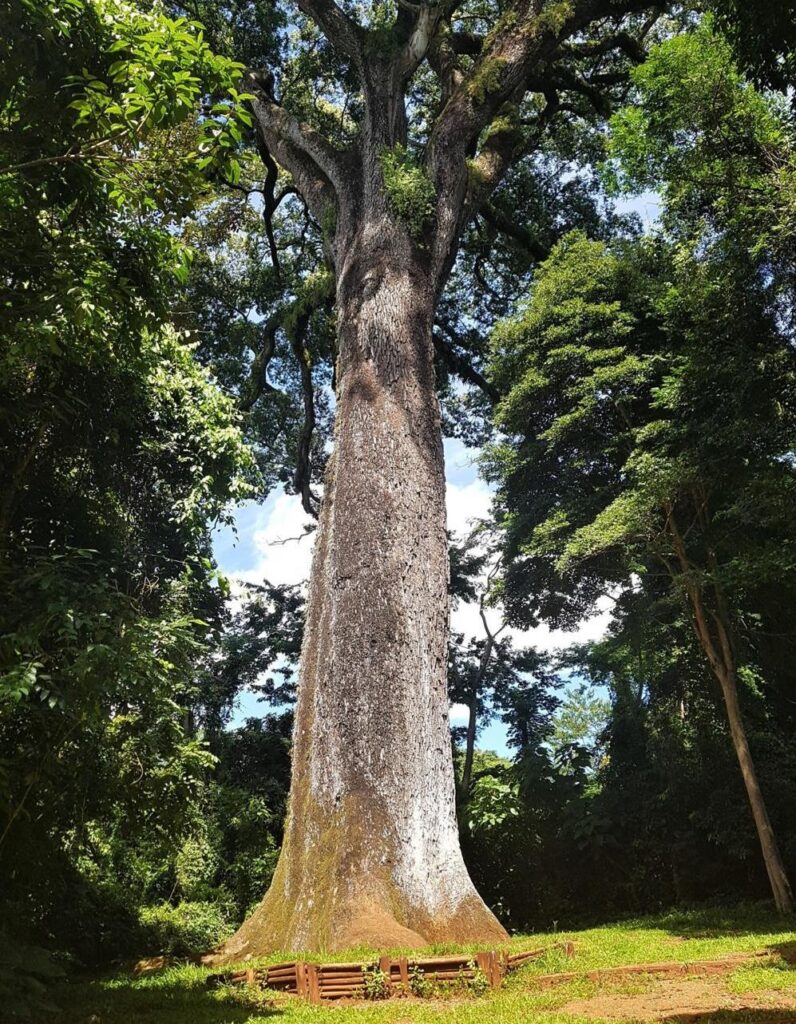
Jequitibá is the name of a group of trees native to Brazil, known for their large size and ecological importance in tropical forests. Its wood has good properties for carpentry and construction, and is used in a variety of applications.
Family
Lecythidaceae
Color
Light brown to pinkish
Density
0.55 to 0.75 g/cm³
Uses
Building construction, carpentry, furniture, interior finishes, shipbuilding, barrels and casks, rural structures, boards and planks.
Grain
Usually straight
Conservation Passport
- IUCN
- C. legalis: Vulnerable (VU) · assessed in 1998
- CITES
- Not listed
- BRAZILIAN RED LIST
- C. legalis (jequitibá-rosa): Endangered (EN). C. estrellensis: not listed
- LEGISLATION
- C. legalis is a threatened species (EN) on the official list: cutting, transport and trade of native trees are prohibited, except from licensed plantations. C. estrellensis: PMFS or clearing authorization, and DOF.

About the species
Jequitibá (Cariniana spp.) refers to a group of tree species belonging to the Lecythidaceae family.
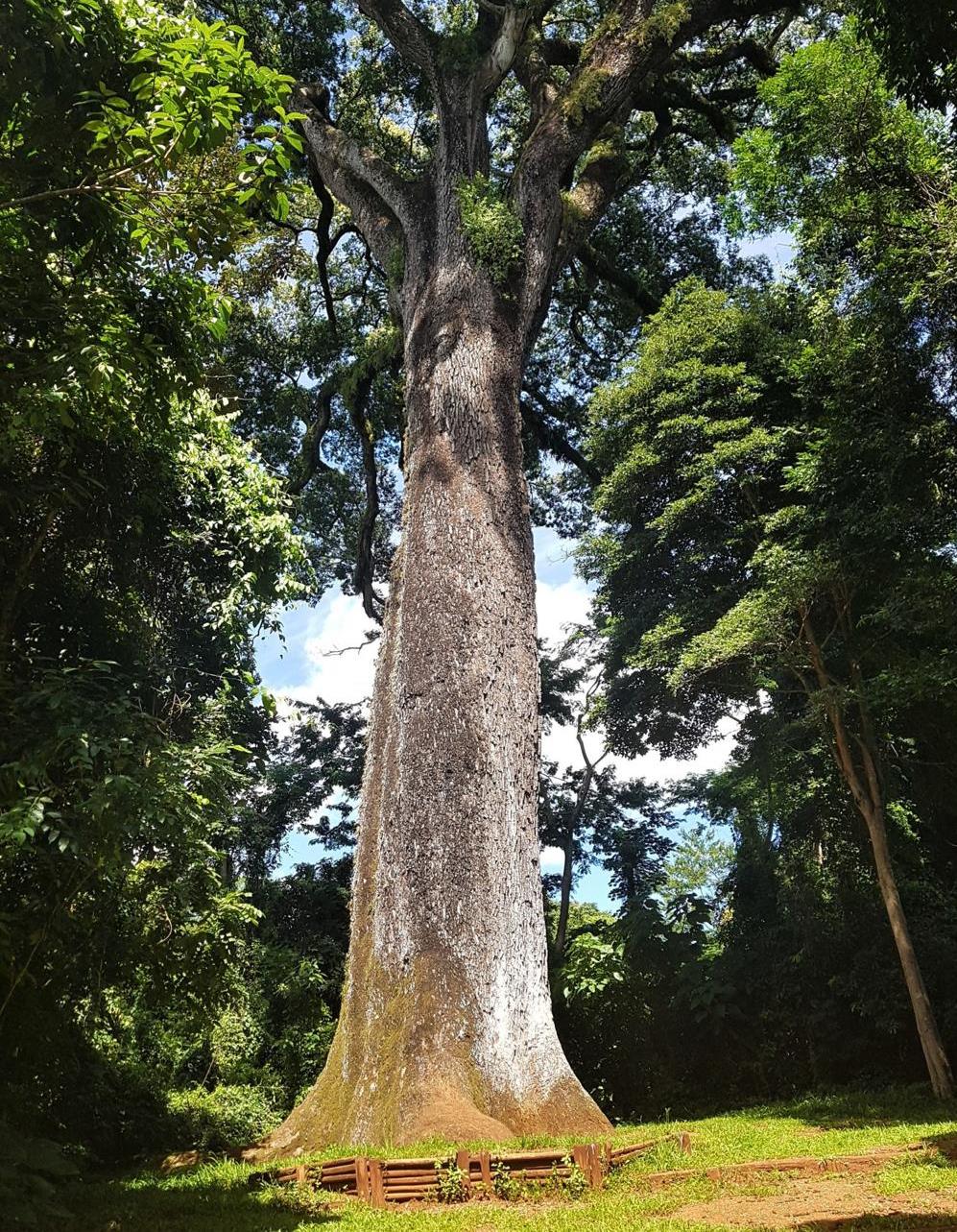
It stands out for its large size and longevity, and is considered one of the largest trees in Brazilian forests.
It mainly covers two species: jequitibá-rosa (Cariniana legalis) and jequitibá-branco (Cariniana estrellensis).
Both belong to the Lecythidaceae family, which also includes the Brazil nut tree and the sapucaia.
Main species: Cariniana legalis and Cariniana estrellensis
The Lecythidaceae family includes important tropical trees, such as the Brazil nut tree.
Jequitibá has several common names in Brazil. It is called the “giant of the forest” because of its exceptional size.
- Common names
Historical and cultural significance
– Jequitibá has great historical and symbolic importance in Brazil. Centuries-old trees have become historical and tourist landmarks.
– Frequently mentioned in Brazilian literature and popular culture, it is associated with the longevity and grandeur of the forests.
– Some historic specimens are more than 500 years old and are considered natural heritage.
– Traditionally, its wood is used in building construction, carpentry and rural structures.
– The species is also highly relevant ecologically, playing an important role in maintaining forest ecosystems.
Botanical classification
- DOMAIN
- Eukaryota
- KINGDOM
- Plantae
- DIVISION
- Magnoliophyta
- CLASS
- Magnoliopsida
- ORDER
- Ericales
- FAMILY
- Lecythidaceae
- GENUS
- Cariniana
Natural distribution

- States of occurrence
- Ecology and habitat
– It grows in tropical forests, fertile soils and humid climates.
– Countries of occurrence (South America): Brazil / Colombia / Venezuela / Guianas / Peru / Bolivia
– Biomes in Brazil: Atlantic Forest / Amazon
Tree morphology
- SIZE
- Large tree, between 30 and 50 m tall.
- TRUNK
-
Straight and cylindrical.
Buttress roots: Often present at the base.
- BARK
- Thick and fissured.
- CROWN
- High.
- DBH
- Often over 2 meters.
- LEAVES
- Simple and alternate.
- FRUIT
- Woody capsules that release winged seeds dispersed by the wind.
Maturity and harvest
- Timeline · from seed to senescence
Economic harvest · 60 to 100 years
economic harvest age
Full maturity · 80 to 120 years
peak quality
– Jequitibá grows slowly to moderately.
– Forest management sets large cutting diameters, usually above 60 cm DBH.
– Because of their ecological value, many old specimens are preserved.
Wood characteristics
- HEARTWOOD
- Light brown to pinkish.
- SAPWOOD
- Light-colored, not very distinct.
- TEXTURE
- Medium.
- GRAIN
- Usually straight.
- Working properties
– Dimensional stability: good.
– Workability: good.
– Natural durability: moderate.
– Density: Medium (0.55 to 0.75 g/cm³).
– Classification: It does not reach the density and durability of very heavy noble woods such as ipê or cumaru; It is classified as a semi-noble wood due to its good balance of strength, workability and commercial value.
Wood uses
- Uses of the tree
– Reforestation
– Environmental conservation
– Tree planting
Conservation and legislation
– Its harvesting must follow Brazilian environmental law, sustainable forest management plans and the protection of large-sized species.
– Some jequitibá species have declined due to deforestation of the Atlantic Forest.
Additional information
– Jequitibá is one of the most emblematic trees of Brazilian forests.
– It stands out for its large size (one of the largest trees in South America); its great longevity (some trees can live for centuries and are considered natural symbols of environmental conservation); and its ecological importance, as it contributes to forest biodiversity.
– Its wood has good technological properties and wide application in joinery and light construction.
– It provides shelter and food for local wildlife.
– High historical and cultural value.
– The fruit has a cultural role: in Indigenous tradition it served as a “pipe”, and in folk legends it is attributed to the Saci.