
- ATLAS OF WOODS
- Species Data Sheet
- ORIGIN: Amazon
Pequiá
- Caryocar villosum
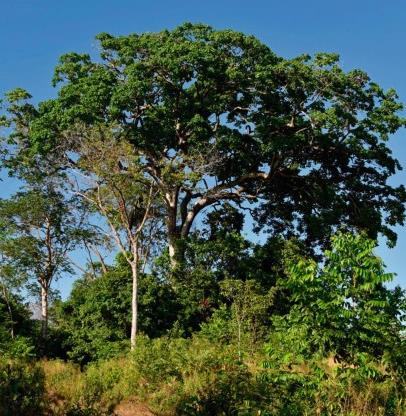
Pequiá is a tree native to the Amazon, known for the high quality and strength of its wood, for fruits prized by wildlife and for its important ecological role in tropical forests. It is widely used in heavy construction and structural applications.
Family
Caryocaraceae
Color
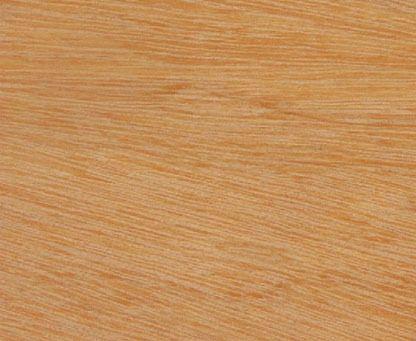
Yellowish brown to olive brown, which may darken to dull brown
Density
0.75 to 0.95 g/cm³
Uses
Heavy construction, beams and posts, bridges, piles, railroad ties, structural carpentry, flooring and floorboards.
Grain
Usually interlocked
Conservation Passport
- CITES
- Not listed
- BRAZILIAN RED LIST
- Not on the official list
- LEGISLATION
- Not on the official list of threatened species: harvesting of native trees only with an approved PMFS or a clearing authorization from the environmental agency, and transport with a DOF (Sinaflor).
About the species
Pequiá (Caryocar villosum) is a tree species native to the Amazon region, belonging to the Caryocaraceae family.
It stands out for its dense, strong and durable wood, and is widely used in building construction.
The pequiá fruit has edible pulp.
The Caryocaraceae family includes tropical species that produce fruits and woods of great economic value.
The species is known by several names in the Amazon. It should not be confused with the Cerrado pequi (Caryocar brasiliense), which belongs to the same genus.
- Common names
Historical and cultural significance
– Pequiá has great economic importance in the Amazon region.
– Traditionally, its wood is used in heavy construction, outdoor structures and infrastructure works.
– Its fruits are used in traditional Amazonian cuisine.
– It is present in agroforestry systems and traditional extractivism.
– The species is valued both for its wood and for its ecological importance.
– It is an important species for wildlife.
Botanical classification
- DOMAIN
- Eukaryota
- KINGDOM
- Plantae
- DIVISION
- Magnoliophyta
- CLASS
- Magnoliopsida
- ORDER
- Malpighiales
- FAMILY
- Caryocaraceae
- GENUS
- Caryocar
- SPECIES
- Caryocar villosum
Natural distribution

- States of occurrence
- Ecology and habitat
– A characteristic species of Amazonian upland (terra firme) forests, it prefers deep, well-drained soils with a clayey texture.
– Heliophilous tree, growing best in open areas or clearings.
– High longevity, able to live for centuries.
– Countries of occurrence (South America): Brazil / Guyana / Suriname / French Guiana / Venezuela / Colombia / Peru
Tree morphology
- SIZE
- Large tree, between 25 and 50 m tall.
- TRUNK
- Straight and cylindrical.
- BARK
- Thick and rough.
- CROWN
- High.
- DBH
- 60 to 100 cm.
- LEAVES
- Compound.
- FRUIT
- Drupes containing seeds surrounded by pulp.
Maturity and harvest
- Timeline · from seed to senescence
Economic harvest · 30 to 50 years or more
economic harvest age
Full maturity · 50 to 70 years
peak quality
– Pequiá grows moderately to slowly.
– Forest management sets large cutting diameters, usually above 60 cm DBH.
Wood characteristics
- HEARTWOOD
- Yellowish brown to olive brown, which may darken to dull brown.
- SAPWOOD
- Light yellow to grayish beige in color.
- TEXTURE
- Medium to coarse.
- GRAIN
- Usually interlocked.
- Working properties
– Workability: moderate to difficult.
– Mechanical strength: high.
– Natural durability: high, with resistance to fungi and insects.
– Drying: slow, with a risk of checking and warping, and requiring appropriate techniques.
– Density: High, the wood being classified as heavy to very heavy (0.75 to 0.95 g/cm³).
– Classification: It is classified as a semi-noble wood due to its high strength and durability, and is widely used in structural applications.
Wood uses
- Uses of the tree
– Production of edible fruits
– Food for wildlife
– Agroforestry systems
Conservation and legislation
– Its harvesting must follow Brazilian environmental law, sustainable forest management plans and strict harvesting controls.
– Preserving the species is also important because of the ecological value of its fruits.
Additional information
– Pequiá is one of the main structural woods of the Amazon: a large, long-lived tree with high natural durability, used in high-performance applications.
– Because of its high density, it is harder to process and requires suitable tools.
– Commercially, pequiá wood is considered a high-strength semi-noble wood, and in some applications it may be classified as a noble wood.