
- ATLAS OF WOODS
- Species Data Sheet
- ORIGIN: Atlantic Forest · Cerrado
Açoita-cavalo
- Luehea divaricata
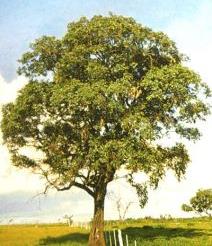
Açoita-cavalo is a medium to large tree native to South America, widely distributed in Brazil and neighboring countries. Its wood has medium density, good workability and multiple applications, but low natural durability.
Family
Malvaceae
Color
Light brown to pinkish brown
Density
0.60 to 0.80 g/cm³
Uses
Furniture frames, turned pieces, boxes and packaging, plywood and veneers, construction, tool handles and wooden articles.
Grain
Straight or slightly oblique
Conservation Passport
- CITES
- Not listed
- BRAZILIAN RED LIST
- Not on the official list
- LEGISLATION
- Not on the official list of threatened species: harvesting of native trees only with an approved PMFS or a clearing authorization from the environmental agency, and transport with a DOF (Sinaflor).

About the species
Açoita-cavalo (Luehea divaricata) is a tree native to South America, widely found in Brazil.
It stands out for its showy flowers and for its medium-density wood, used to make a variety of articles.
Depending on the region, the species goes by several common names. The name “açoita-cavalo” (horse-whip) arose because the tree’s flexible branches were traditionally used as whips or switches for driving animals.
- Common names
Historical and cultural significance
– Historically, açoita-cavalo has been important in several regional Brazilian cultures.
– The species also has medicinal uses in folk culture: preparations made from the leaves and bark are used to treat inflammation, rheumatism and respiratory problems.
– Its flowers are melliferous, contributing to honey production.
– There are records of extracts from the tree being used in traditional medicine and cultural practices.
Botanical classification
- DOMAIN
- Eukaryota
- KINGDOM
- Plantae
- DIVISION
- Magnoliophyta
- CLASS
- Magnoliopsida
- ORDER
- Malvales
- FAMILY
- Malvaceae
- GENUS
- Luehea
- SPECIES
- Luehea divaricata
Natural distribution

- States of occurrence
- Ecology and habitat
– Countries of occurrence: Brazil / Paraguay / Argentina / Uruguay
– Biomes and formations in Brazil: Atlantic Forest / Cerrado / Riparian and deciduous forests
Tree morphology
- SIZE
- Açoita-cavalo is a medium to large tree, reaching 15 to 30 m in height.
- TRUNK
- Twisted and knotty, with grayish bark that fissures with age.
- CROWN
- Broad, dense and rounded.
- DBH
- Can reach up to 100 cm.
- LEAVES
- Simple, alternate, with three clearly visible main veins.
- FRUIT
-
Woody capsules with winged seeds dispersed by the wind.
Flowers: Showy, usually pink or purplish.
Phenology: The species is deciduous, losing its leaves at certain times of the year.
Maturity and harvest
- Timeline · from seed to senescence
Economic harvest · 25 to 35 years
economic harvest age
Full maturity · 35 to 50 years
peak wood quality
– The species’ growth is considered moderate to slow, varying with environmental conditions and silvicultural management.
– In natural forests, trees may be older, since growth depends on factors such as soil fertility, water availability, competition between trees and climatic conditions.
– In forest management, cutting is usually guided by the minimum diameter, generally between 40 and 60 cm DBH.
– Relevant characteristics: Good regeneration by stump sprouting after cutting; High survival rate in plantations; Moderate productivity in forestry systems.
Wood characteristics
- HEARTWOOD
- Light brown to pinkish brown, and may take on a yellowish-brown tone with age.
- SAPWOOD
- Light beige to pale yellow, generally not clearly distinct from the heartwood.
- TEXTURE
- Medium to coarse.
- GRAIN
- Straight or slightly oblique.
- Working properties
– Surface: smooth, without marked luster.
– Natural resistance to wood-boring organisms: low; preservative treatment is recommended.
– Workability: good.
– Drying: fast; allows a good finish on pieces.
– Density: Medium to moderately high (0.60 to 0.80 g/cm³).
– Classification: It is classified as a common wood or one of medium commercial value, as it has moderate density and lower natural durability compared with noble or semi-noble woods.
Wood uses
- Uses of the tree
– Ornamental plant
– Honey production (melliferous species)
– Folk medicinal use
– Reforestation and environmental restoration
Conservation and legislation
Additional information
– Açoita-cavalo is an important species for forest restoration, acting as a secondary species in degraded areas; for agroforestry and silvopastoral systems, providing shade; and for beekeeping, thanks to its production of nectar and pollen.
– Its wide distribution and adaptability to different environmental conditions make the species well suited to reforestation and landscaping projects.
– It is a species of ecological, cultural and economic importance, with multiple applications.