
- ATLAS OF WOODS
- Species Data Sheet
- ORIGIN: Amazon · Cerrado · Atlantic Forest
Amescla
- Protium heptaphyllum
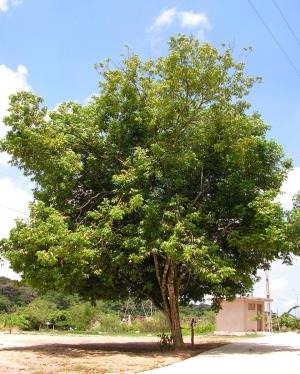
Amescla refers mainly to the species Protium heptaphyllum, of the family Burseraceae. It is a native tree widely distributed in Brazil and notable for producing an aromatic resin of great medicinal, cosmetic and industrial value, as well as supplying good-quality wood for general uses.
Family
Burseraceae
Color
Pinkish beige to yellowish beige
Density
0.52 to 0.60 g/cm³
Uses
Light carpentry, crate making, boards and battens, plywood, simple furniture, packaging and light construction.
Grain
Generally straight
Conservation Passport
- CITES
- Not listed
- BRAZILIAN RED LIST
- Not on the official list
- LEGISLATION
- Not on the official list of threatened species: harvesting of native trees only with an approved PMFS or a clearing authorization from the environmental agency, and transport with a DOF (Sinaflor).

About the species
Amescla (Protium heptaphyllum) is a native tree widely distributed across tropical America, of great importance to traditional communities because of the resin it produces, known as breu-branco.
Its wood has medium density and multiple uses in carpentry and light construction.
It is widely known in Brazil for producing the aromatic resin called breu-branco, traditionally used for medicinal, religious and industrial purposes.
This family includes several species that produce aromatic resins, many used commercially in perfumes, incense and medicinal products.
The species has several common names, depending on the region of Brazil. The name breu-branco refers to the pale, aromatic resin the tree produces.
- Common names
Historical and cultural significance
– Amescla has great cultural importance, especially in the Amazon region.
– Its resin, known as breu-branco, has been used for centuries by Indigenous peoples and traditional communities to make natural incense, for spiritual and religious rituals, as a natural insect repellent, for wound healing and to treat respiratory problems.
– Historically, it was also used for caulking boats and making varnishes, playing a significant role in the extractive economies of the Amazon.
Botanical classification
- DOMAIN
- Eukaryota
- KINGDOM
- Plantae
- DIVISION
- Magnoliophyta
- CLASS
- Magnoliopsida
- ORDER
- Sapindales
- FAMILY
- Burseraceae
- GENUS
- Protium
- SPECIES
- Protium heptaphyllum
Natural distribution

- States of occurrence
- Ecology and habitat
– It grows both in well-drained soils and in wetter environments.
– Countries of occurrence: Brazil / Venezuela / Colombia / Peru / Bolivia / Guianas
– Biomes in Brazil: Amazon / Cerrado / Atlantic Forest
Tree morphology
- SIZE
- Amescla is a medium-sized tree, 10 to 20 meters tall, and can reach up to about 25 m.
- TRUNK
- Straight, cylindrical, with a diameter of 30 to 60 cm.
- BARK
- Grayish to brown, relatively smooth when young and more fissured in mature trees.
- LEAVES
- Compound, alternate and odd-pinnate, usually with 5 to 7 leaflets, the feature that gave rise to the scientific name heptaphyllum (“seven leaves”).
- FRUIT
- Small capsules containing seeds wrapped in a fleshy aril, which attracts seed-dispersing birds.
Maturity and harvest
- Timeline · from seed to senescence
Economic harvest · 25 to 35 years
economic harvest age
Full maturity · 35 to 50 years
peak wood quality
– The species’ growth is considered moderate, with relatively fast early development.
– In natural forests, ages may vary with environmental factors such as soil fertility, rainfall regime, light and competition between trees.
– For this reason, forest management generally uses the minimum cutting diameter as its main criterion.
– This means the wood begins to have good commercial value before its peak, but reaches its best structural quality a few years later, when the tree is more mature.
– Relevant characteristics: Mature trees can reach diameters greater than 40 cm; Good natural regeneration in tropical forests.
Wood characteristics
- HEARTWOOD
- Pinkish beige to yellowish beige in tone.
- SAPWOOD
- Little differentiated, similar in color to the heartwood but slightly lighter.
- TEXTURE
- Medium to fine.
- GRAIN
- Generally straight.
- Working properties
– Workability: good, easy to saw and machine.
– Natural durability: moderate to low against fungi and wood-boring insects.
– Exterior uses: preservative treatment recommended.
– Density: Light to moderately heavy wood (0.52 to 0.60 g/cm³).
– Classification: The wood is classified as a common wood due to its moderate density and lower natural durability.
Wood uses
- Uses of the tree
Conservation and legislation
– Its harvesting must follow Brazilian environmental law, including the Forest Code, the rules for sustainable forest management and the authorizations for extracting forest products.
– Resin collection is generally carried out in an extractive, sustainable way, without the need to fell the tree.
Additional information
– Amescla is a relevant species for agroforestry systems, restoration of degraded areas and the production of non-timber forest products.
– It also has ecological importance, as its fruits feed birds and small animals, and it contributes to the diversity of tropical forests.
– Sustainable use of the resin is an important source of income for traditional communities, reinforcing its economic, social and environmental value.
– Beyond its economic value, the species has ecological, cultural and medicinal relevance, standing out as an important forest resource of Brazilian biodiversity.