
- ATLAS OF WOODS
- Species Data Sheet
- ORIGIN: Amazon · Atlantic Forest
Pau-de-balsa
- Ochroma pyramidale
Pau-de-balsa is the common name of a tree in the Malvaceae family, native to several countries of tropical America, such as Mexico, Peru, Ecuador, Colombia and Bolivia, as well as Brazil. Internationally, it is known as balsa wood or árbol de balsa.

Family
Malvaceae
Color
Creamy white to very light beige
Density
0.10 to 0.20 g/cm³
Uses
Model aircraft, architectural models, thermal insulation, light boatbuilding, floats, surfboards, composite materials and handicrafts.
Grain
Generally straight
Conservation Passport
- IUCN
- Least Concern (LC) · assessed in 2019
- CITES
- Not listed
- BRAZILIAN RED LIST
- Not on the official list
- LEGISLATION
- Not on the official list: plantations of native species do not need a felling permit but must be reported to the environmental agency, and transport requires a DOF; harvesting of native trees follows a PMFS or a permit.

About the species
The pau-de-balsa (Ochroma pyramidale) is a tropical tree belonging to the Malvaceae family (formerly classified as Bombacaceae).
It is known for producing one of the lightest woods in the world, widely used in industrial and craft applications.
The species is native to the tropical forests of the Americas and grows fast in hot, humid environments.
The genus Ochroma includes few species, the best known being the pau-de-balsa, widely cultivated for the production of lightweight wood.
The species has many common names in different regions. The name balsa refers to the lightness of the wood, which was historically used to build light boats and rafts.
- Common names
Historical and cultural significance
– The pau-de-balsa holds great historical and technological importance.
– Indigenous peoples of tropical America used its wood to build rafts, make light utensils and produce floating objects.
– Later, the wood came to be widely used in modern industry: model aircraft, prototype building, thermal insulation and composite materials.
– It played a significant role in the development of aviation and light naval engineering.
Botanical classification
- DOMAIN
- Eukaryota
- KINGDOM
- Plantae
- DIVISION
- Magnoliophyta
- CLASS
- Magnoliopsida
- ORDER
- Malvales
- FAMILY
- Malvaceae
- GENUS
- Ochroma
- SPECIES
- Ochroma pyramidale
Natural distribution

- States of occurrence
- Ecology and habitat
– It grows in open areas, forest gaps and regenerating land.
– Countries of occurrence · South America: Brazil / Ecuador / Peru / Colombia / Bolivia / Venezuela
– Central America: Some Central American countries.
– Biomes in Brazil: Amazon / Atlantic Forest
Tree morphology
- SIZE
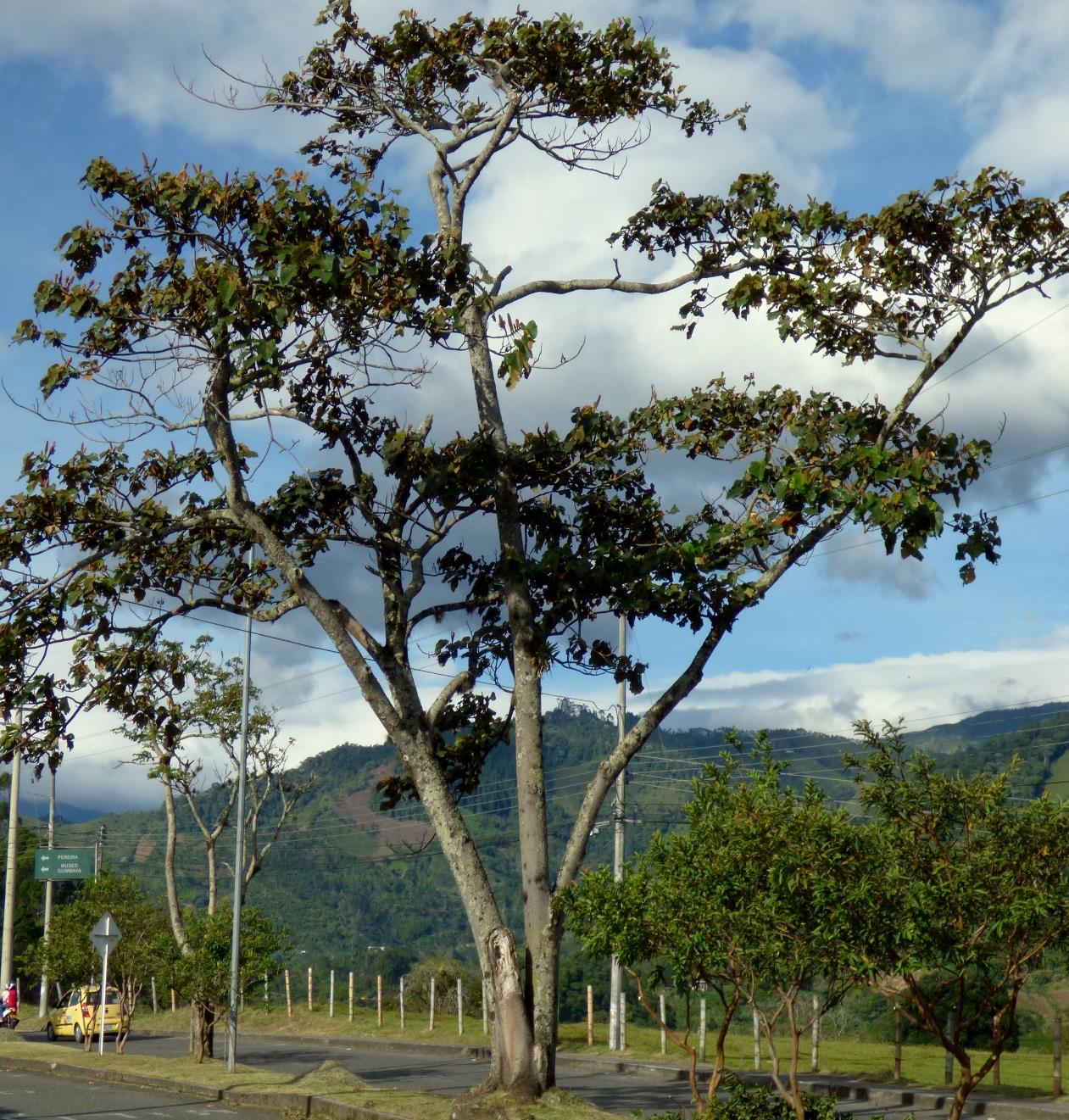
- The pau-de-balsa shows the typical traits of pioneer species, with trees between 20 and 30 m tall.
- TRUNK
- Straight and cylindrical, 60 to 100 cm in diameter.
- BARK
- Pale, smooth and soft.
- LEAVES
- Large, palmate and green.
- FRUIT
- Elongated capsules with seeds wrapped in silky fibers.
Maturity and harvest
- Timeline · from seed to senescence
Economic harvest · 5 to 8 years
economic harvest age
Full maturity · 8 to 15 years
peak wood quality
– The pau-de-balsa grows extremely fast.
– In commercial plantations, it can reach harvestable dimensions in just a few years.
Wood characteristics
- HEARTWOOD
- Creamy white to very light beige.
- SAPWOOD
- White to light cream, indistinct from the heartwood.
- TEXTURE
- Coarse and porous.
- GRAIN
- Generally straight.
- Working properties
– Workability: extremely easy.
– Natural durability: low.
– Density: One of the lightest woods in the world (0.10 to 0.20 g/cm³).
– Advantages: Extremely fast growth; Low weight; Good workability; Use in specialized applications.
– Disadvantages: Low natural durability; High susceptibility to fungi and termites; Low mechanical strength.
– Classification: It is classified as a common wood because of its low density, strength and durability.
Wood uses
- Uses of the tree
– Reforestation
– Restoration of degraded areas
– Agroforestry systems
Conservation and legislation
Additional information
– The pau-de-balsa is of great global economic importance.
– It stands out for its extremely fast growth, its extremely light wood and its high industrial usefulness.
– It is a pioneer species, one of the first to colonize open or degraded areas in tropical forests.
– It is relevant both economically and ecologically, widely used in industry and in environmental restoration projects.