
- ATLAS OF WOODS
- Species Data Sheet
- ORIGIN: Amazon · Cerrado · Atlantic Forest · Pantanal · Caatinga
Ipê
- Handroanthus spp.
Ipê is a group of tree species native to Brazil, widely recognized for the beauty of its flowering and for the high quality of its wood, which is extremely hard, strong and durable. Beyond its ornamental beauty, it stands out for its economic and ecological importance.
Family
Bignoniaceae
Color
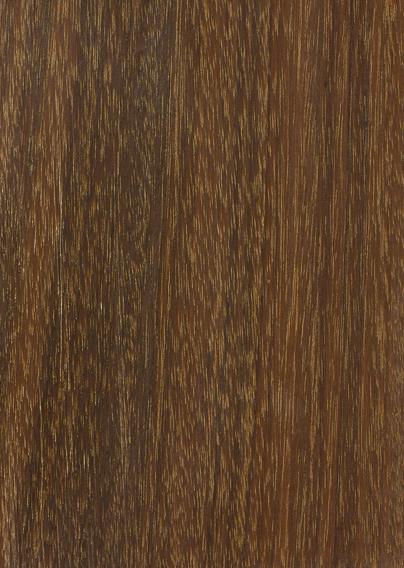
From olive-yellow to greenish brown, possibly darkening over time
Density
0.95 to 1.20 g/cm³ (apparent density)
Uses
High-performance flooring, outdoor decks, heavy structures, civil and naval construction, and premium export products.
Grain
Generally straight to slightly interlocked
Conservation Passport
- IUCN
- H. serratifolius: Endangered (EN) · H. impetiginosus: Near Threatened (NT) · assessments through 2021
- CITES
- Appendix II
- BRAZILIAN RED LIST
- Commercial ipês (H. serratifolius, H. impetiginosus): not listed. Six other Handroanthus species are listed, among them H. grandiflorus (CR)
- LEGISLATION
- Commercial ipês are not on the official list: harvesting only with an approved PMFS and DOF; since November 25, 2024, timber exports (logs, sawn wood, veneers, plywood, processed wood) require a CITES license from IBAMA.
About the species
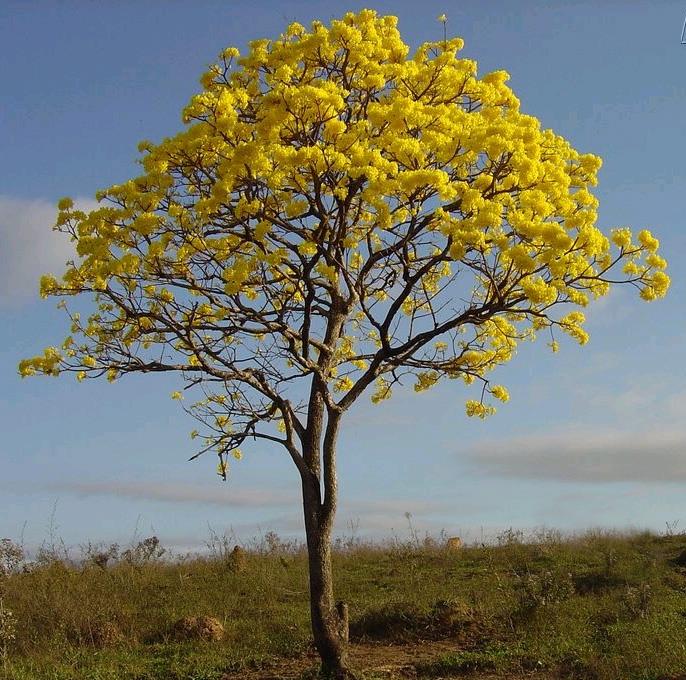
Ipê (Handroanthus spp.) is the symbol of Brazilian flora.
The term ipê does not refer to a single species, but to a group of trees native to the Americas, mainly Brazil, belonging chiefly to the genera Handroanthus and Tabebuia, of the family Bignoniaceae.
Main species: H. albus (ipê-amarelo), H. impetiginosus (ipê-roxo), H. serratifolius, H. chrysotrichus, H. heptaphyllus
Main commercial species: Ipê-roxo: Handroanthus impetiginosus; Ipê-amarelo: Handroanthus albus; Ipê-amarelo-da-mata: Handroanthus serratifolius; Ipê-rosa: Handroanthus heptaphyllus; Ipê-do-cerrado: Tabebuia aurea.
- Common names
Historical and cultural significance
– Ipê is one of Brazil’s most emblematic trees, standing out both for its ornamental value and for the high durability of its wood.
– Its wood has historically been used in heavy construction, outdoor structures and applications subject to intense wear.
– The ipê-amarelo is often regarded as a national symbol, associated with strength, longevity and Brazilian identity.
– The bark (pau-d’arco) also has traditional medicinal use in several regions.
Botanical classification
- DOMAIN
- Eukaryota
- KINGDOM
- Plantae
- DIVISION
- Magnoliophyta
- CLASS
- Magnoliopsida
- ORDER
- Lamiales
- FAMILY
- Bignoniaceae
- GENUS
- Handroanthus
Natural distribution

- States of occurrence
- Ecology and habitat
– Prefers environments with good light availability, being a heliophilous species.
– Climate: tropical and subtropical.
– Rainfall: 800 to 2,000 mm/year.
– Soils: well-drained, medium to high fertility.
– Biomes of natural occurrence: Amazon / Cerrado / Atlantic Forest / Pantanal / Caatinga (adapted species)
Tree morphology
- SIZE
- Medium- to large-sized tree species, able to reach 35 to 40 meters in height, depending on the species and location.
- TRUNK
- Straight, cylindrical.
- BARK
- Thick and fissured, rich in phenolic compounds.
- CROWN
- Rounded, open to moderately dense.
- DBH
- Up to 100 cm, and can be larger.
- LEAVES
- Palmately compound, usually with 5 leaflets.
- FRUIT
-
Elongated capsule containing numerous winged seeds.
Flowers: Yellow, purple or pink, highly ornamental.
Seeds: Light, wind-dispersed.
Phenology: Deciduous in the dry season, flowering while the tree is leafless.
Maturity and harvest
- Timeline · from seed to senescence
Economic harvest · 35 to 50 years
economic harvest age, depending on site and management
Full maturity · 40 to 50 years
the wood generally reaches its full quality after 40 to 50 years
– Ipê growth is considered slow to moderate.
– Early harvesting yields young, less dense wood, because the tannins and natural extractives that give color, dimensional stability and resistance to termites, fungi and moisture are not yet fully formed.
– Because its growth is slow, it is not suited to short cycles.
– Longevity: Over 100 years · the tree can live more than 100 years
Wood characteristics
- HEARTWOOD
- Color may vary by species, from olive-yellow to greenish brown, possibly darkening over time.
- SAPWOOD
- Well differentiated, lighter.
- TEXTURE
- Fine to medium.
- GRAIN
- Generally straight to slightly interlocked.
- Mechanical properties (average values)
- JANKA HARDNESS
- 14,000 to 16,000 N
- MOR (MODULUS OF RUPTURE)
- 150 to 190 MPa
- MOE (MODULUS OF ELASTICITY)
- 18 to 22 GPa
- COMPRESSION PARALLEL TO GRAIN
- 70 to 85 MPa
- Working properties
– Luster: moderate.
– Odor: barely noticeable.
– Volumetric shrinkage: medium to high.
– Dimensional stability: very good after proper drying.
– Resistance to termites and marine borers: excellent.
– Preservative treatment: generally unnecessary.
– Sawing: difficult (high tool wear).
– Drying: slow, with risk of checking.
– Machining: difficult, requires carbide tools.
– Gluing: moderate to difficult.
– Finishing: excellent after proper sanding.
– Workability: difficult due to its high hardness, requiring suitable tools.
– Shrinkage and stability are relatively good for a heavy wood: the low T/R ratio (1.3) indicates less shrinkage anisotropy and a lower risk of warping compared with woods that have a very high T/R ratio.
– Ipê wood is extremely dense, heavy and strong, and is considered one of the most durable in the world.
– Apparent density: 0.95 to 1.20 g/cm³.
Wood uses
- Uses of the tree
– Urban tree planting
– Landscaping projects
– Restoration of degraded areas
– Pollination processes (bees and hummingbirds)
Conservation and legislation
– Cutting permitted only under a sustainable forest management plan.
– Although widely distributed, ipê suffers from illegal and predatory logging, deforestation and habitat loss, and low natural regeneration in degraded areas.
– Some species are at risk or under observation, depending on the region and the intensity of exploitation.
– Sustainable use and incentives for commercial planting and conservation of the species are essential to secure its future.
Additional information
– Ipê is one of the most important native Brazilian trees, combining technological excellence of the wood, ecological value, cultural relevance and significant economic impact.
– Its wood ranks among the most durable and strongest in the world, while the tree is a symbol of beauty, biodiversity and national identity.
– Its wood has high commercial value: strong demand in the domestic and foreign markets; widely exported to Europe, the US and Asia; high price due to scarcity and legal restrictions; classified as having very high natural durability and top-tier structural performance.
– Because its mechanical strength is extremely high, it is ideal for heavy structures.
– It is important for wildlife: its flowers attract bees, birds and other animals.
– The most widely planted for non-commercial purposes are the ipê-amarelo and the ipê-roxo, mainly because of their exuberant flowering, complemented by good tolerance of poor soils and urban stress — which makes them highly sought after in urban areas.
– Commercial ipê plantations are possible but require management and technical knowledge, and are a good option for environmental restoration projects.