
- ATLAS OF WOODS
- Species Data Sheet
- ORIGIN: Atlantic Forest · Cerrado · Amazon
Cedro-rosa
- Cedrela fissilis
Cedro-rosa is a tree species native to South America whose wood is characterized by low density, good workability and a characteristic aroma, and is widely used in woodworking and interior applications.
Family
Meliaceae
Color
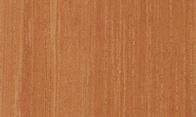
From light brown to golden brown, possibly darkening over time
Figure
Fine, uniform veining
Density
0.50 to 0.70 g/cm³
Uses
Fine and luxury furniture, doors and windows, artistic woodworking, ceilings and wall paneling, sculpture and carving, musical instruments, light interior construction, canoes and crate making.
Grain
Generally straight or slightly wavy
Conservation Passport
- IUCN
- Vulnerable (VU) · assessed in 2018
- CITES
- Appendix II
- BRAZILIAN RED LIST
- Vulnerable (VU)
- LEGISLATION
- Threatened species (VU) on the official list and CITES App. II: cutting of native specimens prohibited, except in licensed plantations or under expressly regulated management; timber exports require a CITES license.
About the species
Cedro-rosa (Cedrela fissilis) has great economic and historical importance, traditionally used to make furniture, sculptures and light building elements.
Its lightness, good workability and appearance lead some technicians and market players to consider it a noble wood, although it is less strong than dense woods (ipê, cumaru).
Due to intense exploitation, it has become a threatened species.
- Common names
Historical and cultural significance
– Cedro-rosa is one of the most traditional woods of South America, widely used since the colonial period.
– It has a strong cultural presence in Brazilian carpentry and historic buildings.
– Its wood became a benchmark in woodworking thanks to its ease of working and good finish.
Botanical classification
- DOMAIN
- Eukaryota
- KINGDOM
- Plantae
- DIVISION
- Magnoliophyta
- CLASS
- Magnoliopsida
- ORDER
- Sapindales
- FAMILY
- Meliaceae
- GENUS
- Cedrela
- SPECIES
- Cedrela fissilis
Natural distribution

- States of occurrence
- Ecology and habitat
– Its ideal habitat covers regions with a tropical to humid subtropical climate.
– A heliophilous species, it needs good light to grow.
– Important for reforestation and environmental restoration.
– Biomes in Brazil: Atlantic Forest / Cerrado / Amazon / Transition regions
– Other countries: Argentina / Paraguay / Bolivia
Tree morphology
- SIZE
-
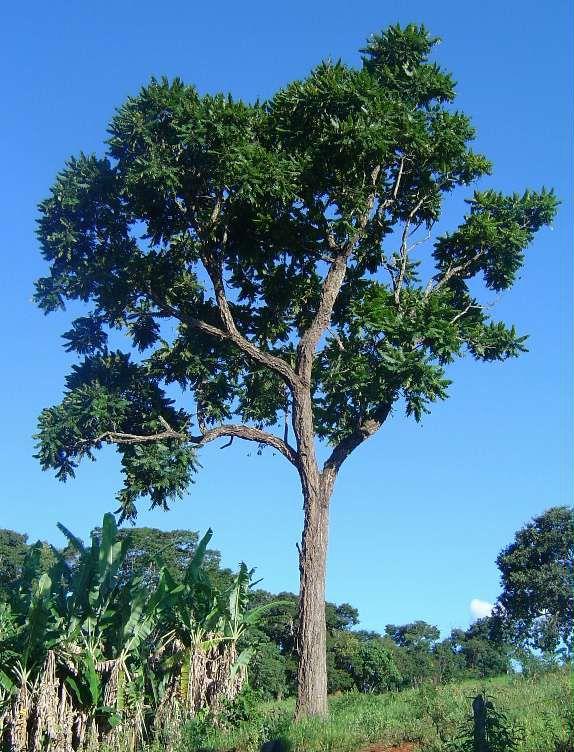
The cedro-rosa tree is medium- to large-sized, able to reach 15 to 35 meters in height.
Seeds: Winged, wind-dispersed.
- TRUNK
- Straight, cylindrical, with a long, clean bole.
- BARK
- Thick, grayish brown, exuding aromatic resin.
- CROWN
- Tall, broad and sparse.
- DBH
- Can exceed 1 meter in fully mature trees.
- LEAVES
- Compound, pinnate, large and aromatic.
Maturity and harvest
- Timeline · from seed to senescence
Economic harvest · 20 to 30 years in plantations
and may reach 30 to 40 years under natural conditions
Full maturity · After approximately 30 years
full wood maturity
– Cedro-rosa growth is moderate to fast compared with other native species.
– Despite its relatively fast growth, harvesting must follow sustainable management due to the natural decline in its populations.
Wood characteristics
- HEARTWOOD
- Heartwood color: ranges from light brown to golden brown, possibly darkening over time.
- SAPWOOD
- Distinct and lighter.
- TEXTURE
- Medium to coarse, with fine, uniform veining.
- GRAIN
- Generally straight or slightly wavy.
- Characteristics
- JANKA HARDNESS
- 3,000 to 3,800 N (relatively soft)
- MOR (MODULUS OF RUPTURE)
- Moderate
- Working properties
– Natural durability: moderate, requiring treatment for the wood to be used outdoors.
– Workability: excellent, as it is easy to saw and can be planed and turned without major problems.
– Permeability: good, accepting treatment with chemical preservatives.
– Fastening: good nail and screw holding.
– Finishing: very good, as it takes sanding, polishing, painting and varnishing well, and shows good adhesion in gluing.
– Drying: fast and easy, with a low incidence of defects.
– Aroma: characteristic, pleasant.
– A wood valued for its ease of working and dimensional stability, recommended mainly for interior and sheltered uses.
– Density: Medium, ranging from 0.50 to 0.70 g/cm³.
– Shrinkage: Medium, with some risk of warping, but generally good dimensional stability.
– Compressive strength: Low to medium
– Impact resistance: Medium
Wood uses
- Uses of the tree
– Reforestation and tree planting
– Restoration of degraded areas
– Ornamental use
Conservation and legislation
Additional information
– The species is important in reforestation and environmental restoration projects.
– It can be used in plantations, but its commercial cultivation is hampered by the cedar shoot borer.
– Hypsipyla grandella is a moth whose larvae attack the apical shoot, impairing the plant’s vertical growth. Attacked trees can lose up to 35% of their height growth in the first three years, and repeated attacks can halt their growth or even kill them.
– Today, due to the reduction of natural stocks and its vulnerability, its commercial exploitation is highly regulated.