
- ATLAS OF WOODS
- Species Data Sheet
- ORIGIN: Amazon
Louro-pardo
- Cordia trichotoma
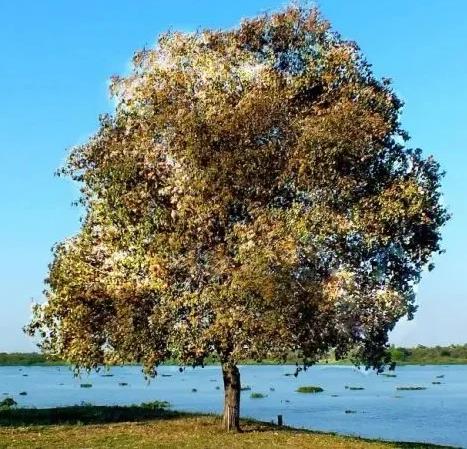
Louro-pardo is a tree species native to the Amazon, whose wood is prized for its good workability, dimensional stability and appearance similar to that of freijó. It is a medium to large species; its wood is light, slightly golden, stable and easy to work.
Family
Boraginaceae
Color
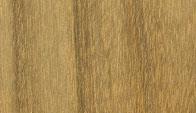
Light brown to yellowish brown
Figure
Decorative dark streaks
Density
0.50 to 0.65 g/cm³ (approximately)
Uses
Fine furniture and woodworking, laminates and decorative veneers, plywood and panels, doors, windows and frames, interior paneling, moldings and trim, and musical instruments.
Grain
Usually straight to slightly wavy
Conservation Passport
- IUCN
- Least Concern (LC) · assessed in 2019
- CITES
- Not listed
- BRAZILIAN RED LIST
- Not on the official list
- LEGISLATION
- Not on the official list of threatened species: harvesting of native trees only under an approved PMFS (sustainable forest management plan) or a clearing permit from the environmental agency, and transport with a DOF (Sinaflor).
About the species
Louro-pardo has significant commercial value and is widely used in woodworking and in the production of decorative veneers.
It is often sold under the name “louro-freijó” because of its visual similarity to true freijó (Cordia goeldiana), although it is a distinct species.
Louro-pardo (Cordia trichotoma, family Boraginaceae) is incorrectly called “freijó” because it looks like the other wood. Both belong to the same genus (Cordia) but are different species, with distinct characteristics and commercial value: true freijó is far more highly valued than louro-pardo.
Some specialists do not consider louro-pardo a noble wood; however, most classify it as noble, which the market does not fully accept.
The issue is controversial and depends on the criteria adopted.
- Common names
Historical and cultural significance
– Louro-pardo is widely used in Brazilian woodworking, especially as an alternative to rarer woods.
– Since the 20th century it has become important to the Brazilian furniture industry: furniture, decorative veneers and interior finishes.
– Culturally, it is associated with quality woodworking and the sustainable use of tropical woods, serving as an alternative to heavier woods.
– It was an abundant, affordable wood, easy to work and strong enough, becoming a practical alternative to rarer noble woods.
Botanical classification
- DOMAIN
- Eukaryota
- KINGDOM
- Plantae
- DIVISION
- Magnoliophyta
- CLASS
- Magnoliopsida
- ORDER
- Boraginales
- FAMILY
- Boraginaceae
- GENUS
- Cordia
- SPECIES
- Cordia trichotoma
Natural distribution

- States of occurrence
- Ecology and habitat
– Occurs mainly in terra firme (upland) forests, on well-drained soils.
– Countries: Brazil / Bolivia / Peru
Tree morphology
- SIZE
- Medium to large tree, able to reach 20 to 30 meters in height.
- TRUNK
- Straight, cylindrical, with a long, clean bole.
- BARK
- Grayish brown, relatively smooth to slightly fissured.
- CROWN
- Tall, rounded and moderately dense.
- DBH
- Highly variable, measuring 60 to 100 cm.
- LEAVES
- Simple, large, rough, dark green.
- FRUIT
- Small, dry, containing light seeds dispersed by the wind.
Maturity and harvest
- Timeline · from seed to senescence
Economic harvest · 20 to 30 years in plantations
average economic harvest age, which may be higher in natural forests
Full maturity · 30 to 40 years
full maturity of the wood occurs at older ages, generally between 30 and 40 years
– Louro-pardo growth is moderate.
– A species considered suitable for forest management and commercial plantations.
Wood characteristics
- HEARTWOOD
- Light brown to yellowish brown, with decorative dark streaks.
- SAPWOOD
- Lighter, little differentiated from the heartwood.
- TEXTURE
- Medium to fine.
- GRAIN
- Usually straight to slightly wavy.
- Working properties
– Density: Medium (approximately 0.50 to 0.65 g/cm³).
– Hardness: Medium.
– Natural durability: Moderate.
– Stability: Very good.
– Workability: Excellent (easy to saw, sand and machine).
– A wood prized for its stability, beauty and finish.
Wood uses
- Uses of the tree
– Louro-pardo is recommended for urban tree planting
– Provides food for bees
– Used in reforestation and sustainable management
– Used in intercropping and as protection for perennial crops that require shade
– Widely used in the recovery of degraded areas
Conservation and legislation
Additional information
– Louro-pardo is often used as a commercial substitute for freijó because of its aesthetic similarity.
– A wood highly valued for woodworking and interior design.
– Excellent dimensional stability and good finishing.
– A lighter alternative to heavy woods such as jatobá and cumaru.
– With moderate natural durability, it is best used indoors.
– Its low treatability limits its use outdoors in contact with the ground or in high humidity, unless it receives specialized treatment.
– Economically important to the Amazon timber sector.