
- ATLAS OF WOODS
- Species Data Sheet
- ORIGIN: Amazon
Cumaru
- Dipteryx odorata
Cumaru is a large Amazonian tree. Its wood is dense, strong and durable, widely used in flooring and outdoor construction. It also produces aromatic seeds (tonka beans), prized in perfumery and, to a lesser extent, in cooking.
Family
Fabaceae
Color
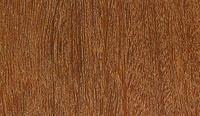
Brown to yellowish brown, possibly with golden highlights
Density
0.95 to 1.10 g/cm³
Uses
Heavy and structural construction, bridges and outdoor works, railroad ties, outdoor decks and flooring, high-wear floors, structural posts and beams, and shipbuilding.
Grain
Generally interlocked
Conservation Passport
- IUCN
- Data Deficient (DD) · assessed in 2017
- CITES
- Appendix II
- BRAZILIAN RED LIST
- Not on the official list
- LEGISLATION
- Not on the official list of threatened species: harvesting of native trees only with an approved PMFS or a clearing authorization, and transport with DOF; as it is CITES App. II, timber exports require a CITES license issued by IBAMA.
About the species
Cumaru (Dipteryx odorata) wood is among the strongest in the world and has high economic value.
Its seeds contain coumarin, a natural aromatic substance used as a fixative in fragrances.
It is important for wildlife as a food source.
It holds high economic and ecological value in the Amazon.
- Common names
Historical and cultural significance
– Cumaru has historical relevance in the Amazon, traditionally used by Indigenous peoples as a source of aroma, as a repellent and in medicinal practices.
– During the colonial and post-colonial periods, it became an important export product because of its coumarin content.
– Its extremely strong wood established cumaru as one of the most valued noble woods of the Amazon.
Botanical classification
- DOMAIN
- Eukaryota
- KINGDOM
- Plantae
- DIVISION
- Magnoliophyta
- CLASS
- Magnoliopsida
- ORDER
- Fabales
- FAMILY
- Fabaceae
- GENUS
- Dipteryx
- SPECIES
- Dipteryx odorata
Natural distribution

- States of occurrence
- Ecology and habitat
– Occurs in terra firme forests, preferring deep, clayey, well-drained soils.
– It is important for wildlife: its fruits are eaten by rodents and birds.
– Countries of occurrence (South America): Brazil / Venezuela / Colombia / Peru / Bolivia / Guyana / Suriname / French Guiana
Tree morphology
- SIZE
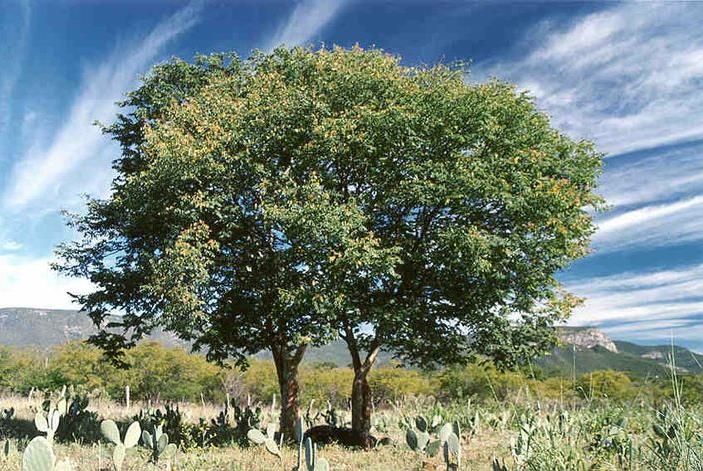
- Large tree, able to reach up to 40 meters in height.
- TRUNK
- Straight, cylindrical, with a long bole, up to 15 m free of branches.
- BARK
- Thick and grayish brown, fissured, releasing a characteristic odor when cut.
- CROWN
- Tall and broad in forests, but flattened in the caatinga.
- DBH
- Ranging from 60 to 80 cm, reaching up to 1.20 m in very old individuals in tropical forests.
- LEAVES
- Compound, alternate, with leathery leaflets.
- FRUIT
-
Oval drupe with a hard shell.
Seed: Large, aromatic, rich in coumarin.
Maturity and harvest
- Timeline · from seed to senescence
Economic harvest · 35 to 50 years
economic harvest age, which may vary with environmental conditions and management
Full maturity · 40 to 60 years
full wood maturity occurs, on average, between 40 and 60 years
– Cumaru growth is moderate to slow.
– Although growth is relatively slow, the very high value of the wood and seeds can make planting it economically worthwhile.
– Sustainable forest management is recommended.
Wood characteristics
- HEARTWOOD
- Brown to yellowish brown, possibly with golden highlights.
- SAPWOOD
- Lighter, yellowish.
- TEXTURE
- Ranges from medium to coarse, uniform.
- GRAIN
- Generally interlocked.
- Working properties
– Natural durability: high, with resistance to fungi, termites and moisture.
– Luster: medium.
– Stability: very high.
– Drying: slow, but with little tendency to crack or warp when well conducted.
– Odor: the heartwood gives off a characteristic pleasant odor (coumarin), especially when freshly cut.
– Permeability: low, making preservative treatments difficult.
– Workability: considered difficult due to its high hardness, although it yields an excellent finish.
– Polishing: good.
– Compressive strength parallel to grain: very high.
– Density: Very high (0.95 to 1.10 g/cm³).
– Hardness: Janka hardness averages between 10,000 and 12,000 N, and may vary with the origin of the wood.
Wood uses
- Uses of the tree
– Seeds (tonka beans)
– Perfumery and flavorings
– Traditional medicine (anti-inflammatory, tonic)
– Natural repellent
– Amazon reforestation
– Restoration of degraded areas
Conservation and legislation
– Harvesting is regulated by sustainable forest management plans, requiring environmental authorization and forest replacement under Brazilian law (IBAMA and state agencies).
– In some regions, extraction is strictly controlled.
Additional information
– Cumaru is a heliophilous species in its adult phase and shade-tolerant when young.
– Its wood is among the strongest in the world.
– A species of high economic and ecological value in the Amazon.
– One of the most sought-after Amazonian woods on the world market.
– Its natural durability is comparable to that of ipê and maçaranduba, and it is used as a direct substitute in many applications.
– It is a species dispersed by animals such as bats; growing it can help restore degraded areas and conserve tropical ecosystems.
– Besides the wood, it provides the seeds known as tonka beans, important to the perfume, cosmetics and food industries: perfumery (fragrance fixative); cosmetics; cooking (in small quantities, as a flavoring in gastronomy); pharmacology (coumarin has anticoagulant and aromatic properties). These seeds carry significant added value and can diversify the economic use of the species.