
- ATLAS OF WOODS
- Species Data Sheet
- ORIGIN: Amazon
Amapá
- Brosimum parinarioides
Amapá is an Amazonian tree of great ecological, cultural and economic importance. Its wood has properties suited to many industrial uses, and the tree is also significant in extractive systems because of its latex production.

Family
Moraceae
Color
Pale yellow to light brown
Density
0.50 to 0.65 g/cm³
Uses
Furniture, plywood and veneers, boards and planks, light construction and general carpentry.
Grain
Generally straight or slightly interlocked
Conservation Passport
- IUCN
- Least Concern (LC) · assessed in 2020
- CITES
- Not listed
- BRAZILIAN RED LIST
- Not on the official list
- LEGISLATION
- Not on the official list of threatened species: native trees may only be harvested under an approved PMFS or a vegetation-removal authorization from the environmental agency, and transport requires a DOF (Sinaflor).

About the species
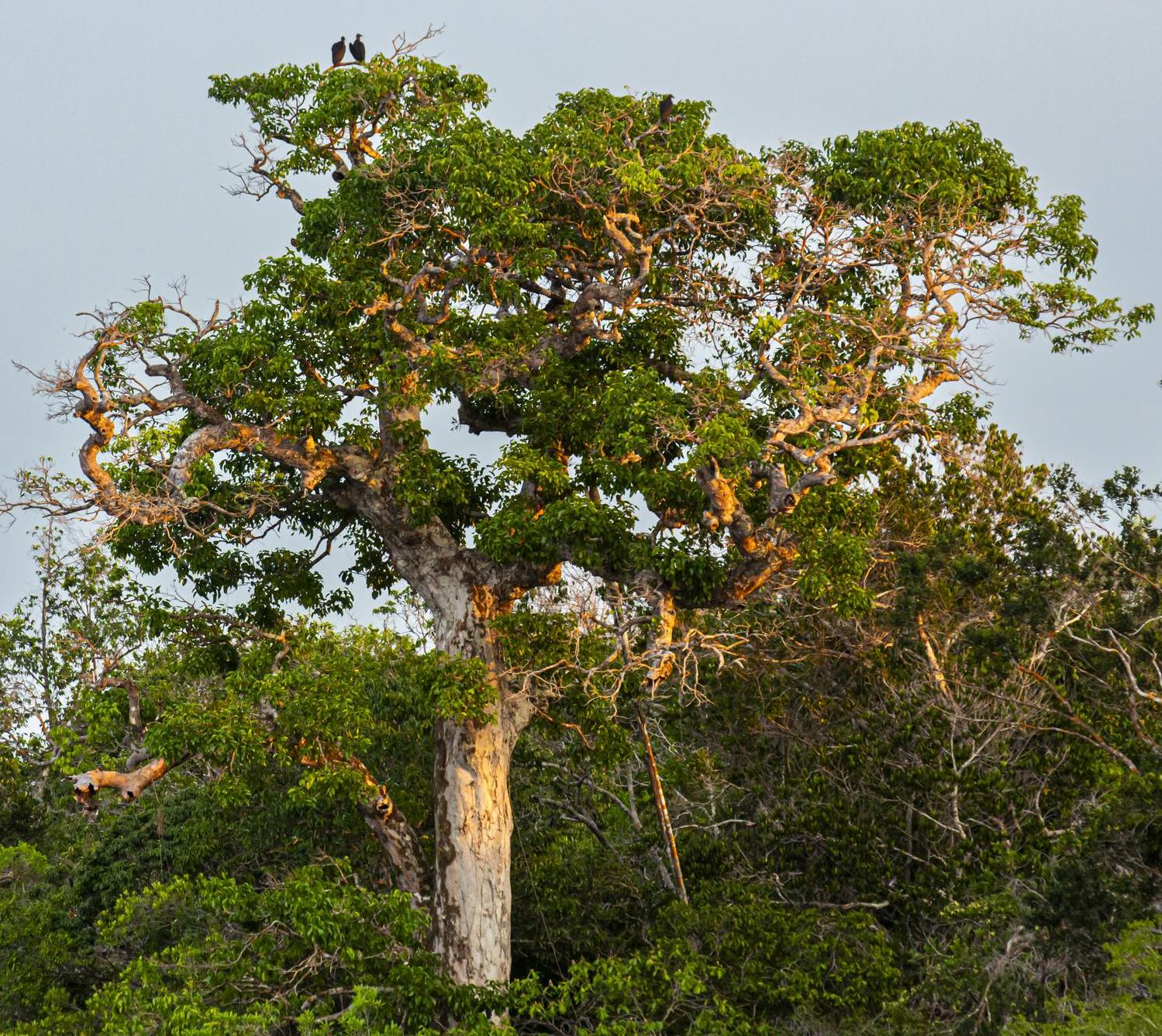
Amapá (Brosimum parinarioides) is a tree species native to the Amazon rainforest, belonging to the Moraceae family.
It stands out for its abundant white latex, known as “leite-de-amapá” (amapá milk), widely used in traditional medicine.
The genus Brosimum belongs to the Moraceae family, a group that includes many tropical trees producing latex and economically valuable wood.
The species is known by several regional names, related to the abundant white latex the tree produces.
- Common names
Historical and cultural significance
– Amapá has great historical and cultural relevance in the Amazon region.
– Its latex is traditionally used by Indigenous peoples and local communities in folk medicine, as a remedy for respiratory ailments, as a nutritional tonic and as a milk substitute in traditional preparations.
– The species has also been used as a source of rubber-like material in handcrafted and industrial applications.
– Drinking “leite-de-amapá” remains part of Amazonian folk medicine.
Botanical classification
- DOMAIN
- Eukaryota
- KINGDOM
- Plantae
- DIVISION
- Magnoliophyta
- CLASS
- Magnoliopsida
- ORDER
- Rosales
- FAMILY
- Moraceae
- GENUS
- Brosimum
- SPECIES
- Brosimum parinarioides
Natural distribution

- States of occurrence
- Ecology and habitat
– Environments: humid tropical forests, terra firme forests and regions with a hot, humid climate.
– Countries: Brazil / the Guianas / Venezuela / Colombia / Peru
Tree morphology
- SIZE
- Medium to large tree, 25 to 35 m tall.
- TRUNK
- Straight and cylindrical.
- BARK
- Thick, exuding white latex.
- CROWN
- Broad and rounded.
- DBH
- Between 60 and 100 cm.
- LEAVES
- Simple, alternate and leathery.
- FRUIT
- Drupe-type or berry-like.
Maturity and harvest
- Timeline · from seed to senescence
Economic harvest · 45 to 70 years
economic harvest age
Full maturity · 70 to 100 years
peak quality
– Amapá grows slowly to moderately.
– Harvesting is generally based on trunk diameter (DBH), according to forest management plans in the Amazon.
– Sustainable management is recommended given the species’ ecological importance.
Wood characteristics
- HEARTWOOD
- Pale yellow to light brown.
- SAPWOOD
- Poorly differentiated.
- TEXTURE
- Medium.
- GRAIN
- Generally straight or slightly interlocked.
- Working properties
– Density: Medium (0.50 to 0.65 g/cm³).
– Workability: Good.
– Drying: Moderate, performing well when controlled.
– Permeability: Moderate.
– In the Brazilian timber market, it is classified as a semi-noble wood because of its intermediate strength and average commercial value.
Wood uses
- Uses of the tree
– Production of latex for traditional medicinal use
– Food for wildlife
– Use in traditional Amazonian medicine
Conservation and legislation
Additional information
– Amapá is very important to the Amazonian extractive economy, standing out for its latex of medicinal and cultural value, moderate timber potential and ecological relevance in tropical forests.
– Despite its industrial use, technological knowledge of its properties is still limited, and further scientific research is needed.