
- ATLAS OF WOODS
- Species Data Sheet
- ORIGIN: Atlantic Forest · Cerrado
Cabreúva
- Myroxylon peruiferum
Cabreúva is a tree species native to Brazil, whose wood is prized for its strength, durability and characteristic aroma; it also produces aromatic resins of economic interest.
Family
Fabaceae
Color
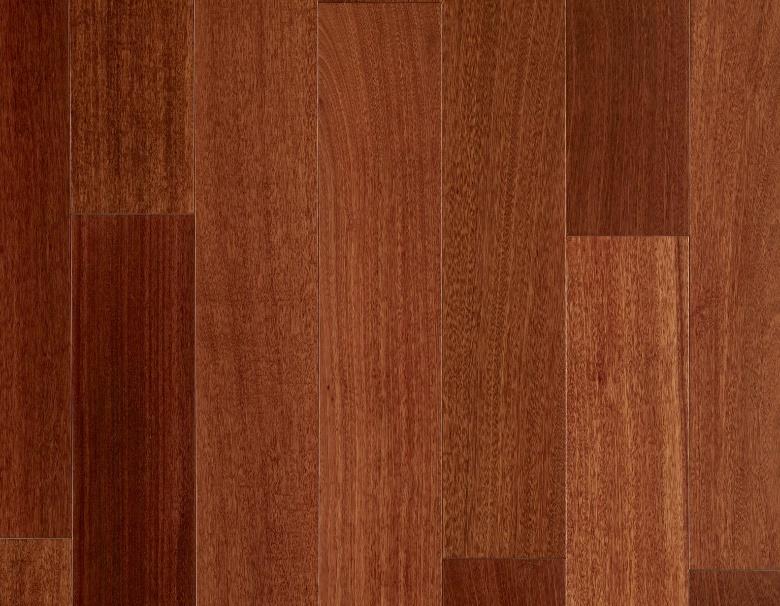
Brown to reddish brown
Density
0.75 to 0.95 g/cm³ (approximately)
Uses
Rural and structural construction, beams, rafters and stakes, flooring and heavy-duty pieces, general carpentry and rustic furniture.
Grain
Usually straight
Conservation Passport
- CITES
- Not listed
- BRAZILIAN RED LIST
- Not on the official list
- LEGISLATION
- Not on the official list of threatened species: harvesting of native trees only under an approved PMFS (sustainable forest management plan) or a clearing permit from the environmental agency, and transport with a DOF (Sinaflor).
About the species
Cabreúva (Myroxylon peruiferum) is economically important both for the use of its wood and for the extraction of aromatic substances used in perfumery and traditional medicine.
Its wood combines high durability, high mechanical strength, dimensional stability, beauty and natural aroma, historical value and relative scarcity, the factors that technically define a tropical noble wood.
- Common names
Historical and cultural significance
– Cabreúva has historically been used both in construction and in the production of aromatic balsams, valued for their medicinal and fragrant properties.
– Indigenous peoples and rural communities use the resin and the wood for traditional therapeutic purposes, as repellents and in construction.
– The strong, durable wood was also widely used in rural structures and heavy carpentry.
Botanical classification
- DOMAIN
- Eukaryota
- KINGDOM
- Plantae
- DIVISION
- Magnoliophyta
- CLASS
- Magnoliopsida
- ORDER
- Fabales
- FAMILY
- Fabaceae
- GENUS
- Myroxylon
- SPECIES
- Myroxylon peruiferum
Natural distribution

- States of occurrence
- Ecology and habitat
– Occurs in tropical and subtropical forests.
– Prefers fertile, deep, well-drained soils.
– Countries (South America): Brazil / Bolivia / Paraguay / Argentina (north) / Peru
Tree morphology
- SIZE
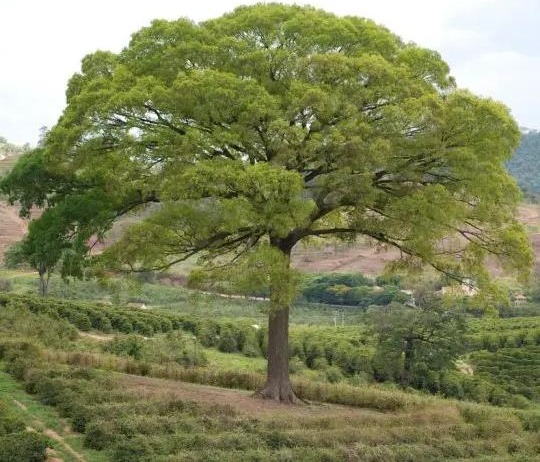
- Medium to large tree, able to reach 20 to 30 meters in height.
- TRUNK
- Straight, cylindrical, with a relatively long bole.
- BARK
- Dark brown, thick, fissured, rich in aromatic resin.
- CROWN
- Rounded, moderately dense.
- DBH
- Usually between 50 and 80 cm.
- LEAVES
- Compound, pinnate, dark green.
- FRUIT
-
Pod containing oily seeds.
Seeds: A resin is extracted from them that yields a natural aromatic balsam.
Maturity and harvest
- Timeline · from seed to senescence
Economic harvest · 30 to 50 years
average economic harvest age, which may vary with environmental conditions
Full maturity · Over 40 years
full maturity of the wood occurs at older ages, generally over 40 years
– Cabreúva growth is considered slow to moderate.
– Sustainable management is recommended because of the species’ history of exploitation.
Wood characteristics
- HEARTWOOD
- Brown to reddish brown.
- SAPWOOD
- Lighter, clearly differentiated from the heartwood.
- TEXTURE
- Medium to fine.
- GRAIN
- Usually straight.
- Working properties
– Density: Medium to high (approximately 0.75 to 0.95 g/cm³).
– Hardness: High.
– Natural durability: High (resistant to fungi and insects).
– Stability: Good.
– Workability: Moderate, with good finishing.
– Odor: Characteristic, due to the presence of aromatic compounds.
Wood uses
- Uses of the tree
– Reforestation and environmental recovery
– Ornamental species
– Uses of the fruits: resin: Production of balsams; Perfumery; Applications in traditional medicine.
Conservation and legislation
Additional information
– Cabreúva has ecological and economic importance and can be used in reforestation and sustainable management systems.
– Its wood is strong and durable, suitable for structural uses.
– Its fruits produce an aromatic balsam of medicinal and commercial value.
– It is a species of significant economic, ecological and medicinal value, important for wildlife and for forest recovery.