
- ATLAS OF WOODS
- Species Data Sheet
- ORIGIN: Atlantic Forest · Cerrado
Capixingui
- Croton floribundus
Capixingui is a tree native to Brazil and other South American countries, with fast growth and an important ecological role in forest regeneration. Its wood has relatively low density and various applications in carpentry and light construction, and the tree is used in reforestation and environmental restoration projects.

Family
Euphorbiaceae
Color
Light beige to light brown
Density
0.40 to 0.55 g/cm³
Uses
Crate making, light carpentry, boards and battens, packaging, rural construction and firewood and charcoal production.
Grain
Generally straight
Conservation Passport
- CITES
- Not listed
- BRAZILIAN RED LIST
- Not on the official list
- LEGISLATION
- Not on the official list of threatened species: harvesting of native trees only with an approved PMFS or a clearing authorization from the environmental agency, and transport with a DOF (Sinaflor).
About the species
Capixingui (Croton floribundus) is a tree native to South America, belonging to the family Euphorbiaceae.
It is a pioneer to early secondary species with relatively fast growth, widely used in reforestation, restoration of degraded areas and recovery of riparian forests.
Its wood, although of moderate to low natural durability, has good workability and is useful in light applications.
The genus Croton includes several tropical tree and shrub species, many with medicinal properties and ecological importance.
The species is known by several common names, depending on the region of Brazil. These names vary according to regional use and the characteristics of the tree.
- Common names
Historical and cultural significance
– Capixingui is relevant mainly in rural communities and in environmental restoration projects.
– Historically, it was used for firewood, making simple utensils, restoring degraded areas and providing shade in agricultural systems.
– Some species of the genus Croton also have medicinal properties used in folk medicine.
– Today, the species is valued mainly for its ecological role in forest restoration programs.
Botanical classification
- DOMAIN
- Eukaryota
- KINGDOM
- Plantae
- DIVISION
- Magnoliophyta
- CLASS
- Magnoliopsida
- ORDER
- Malpighiales
- FAMILY
- Euphorbiaceae
- GENUS
- Croton
- SPECIES
- Croton floribundus
Natural distribution

- States of occurrence
- Ecology and habitat
– It grows in secondary forests, forest edges and regenerating areas.
– Pioneer species.
– Countries of occurrence: Brazil / Paraguay / Argentina
– Biomes and formations in Brazil: Atlantic Forest / Cerrado / Seasonal semideciduous forests
Tree morphology
- SIZE
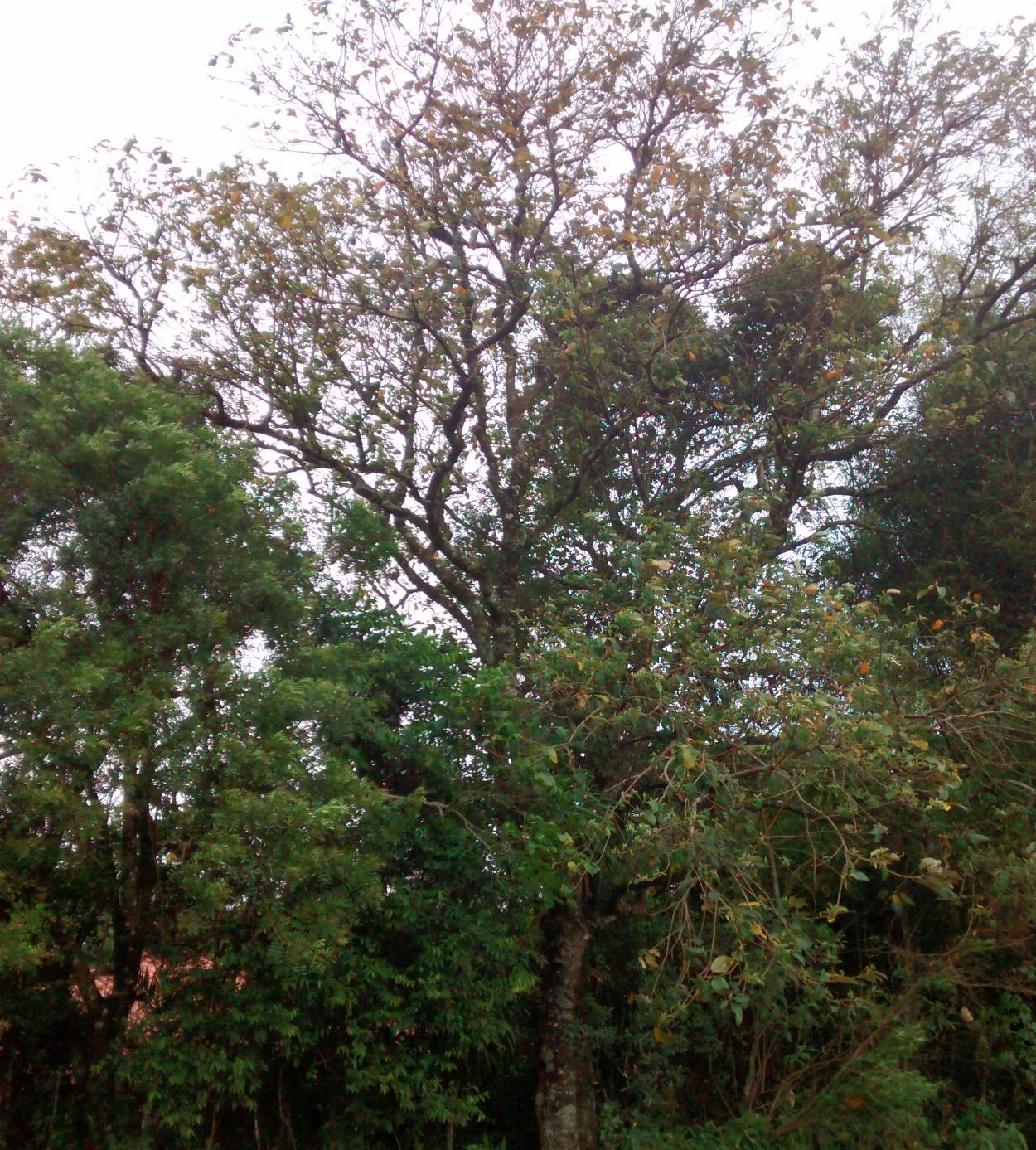
- Capixingui shows the typical traits of fast-growing pioneer species, with trees 8 to 20 meters tall.
- TRUNK
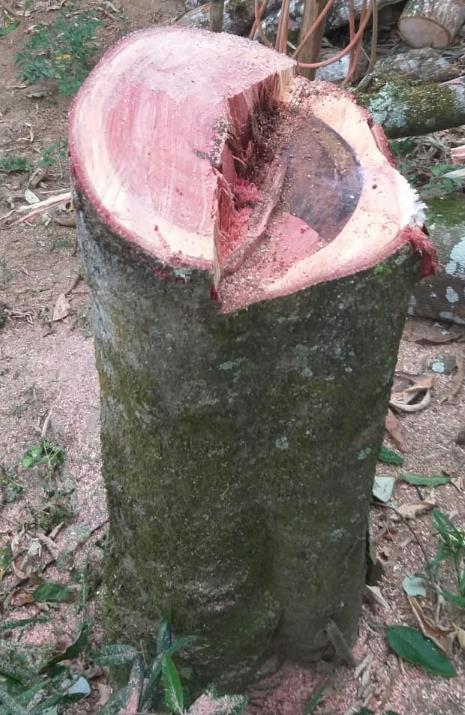
- Straight or slightly twisted, with a diameter of 20 to 40 cm.
- BARK
- Grayish or light brown, relatively thin.
- LEAVES
- Simple, alternate, oval in shape with a slightly rough surface.
- FRUIT
- Small capsules containing seeds dispersed by the wind or by fauna.
Maturity and harvest
- Timeline · from seed to senescence
Economic harvest · 12 to 20 years
economic harvest age
Full maturity · 20 to 30 years
peak wood quality
– Capixingui grows fast, a common trait of pioneer species.
– Because of its fast growth, the species reaches commercial dimensions in relatively short periods.
– In forest management, a minimum cutting DBH of 30 to 40 cm is often used.
Wood characteristics
- HEARTWOOD
- Light beige to light brown.
- SAPWOOD
- Creamy white to pale yellow, not clearly distinct from the heartwood.
- TEXTURE
- Medium to coarse.
- GRAIN
- Generally straight.
- Working properties
– Workability: easy to saw and machine.
– Drying: fast.
– Natural durability: low to moderate.
– Density: Light to moderately light (0.40 to 0.55 g/cm³).
– Classification: It is classified as a common wood due to its low density, lower natural durability and lower commercial value compared with noble woods. For some applications, it may be considered semi-noble.
Wood uses
- Uses of the tree
– Reforestation
– Restoration of degraded areas
– Rural tree planting
– Agroforestry systems
– Because of its fast growth, the species is widely used in environmental restoration projects.
Conservation and legislation
Additional information
– Capixingui is of great ecological importance, as it helps restore degraded forests, provides shade and a microclimate favorable to late secondary species, and offers food and shelter for wildlife.
– Its fast growth and adaptability make the species especially useful in ecological restoration programs and agroforestry systems.