
- ATLAS OF WOODS
- Species Data Sheet
- ORIGIN: Atlantic Forest · Seasonal Forest · Cerradão · Amazon edges
Freijó-verdadeiro
- Cordia goeldiana
Freijó-verdadeiro is a medium- to large-sized native tree species whose wood is widely used in woodworking thanks to its good workability, dimensional stability and decorative appearance.
Family
Boraginaceae
Color
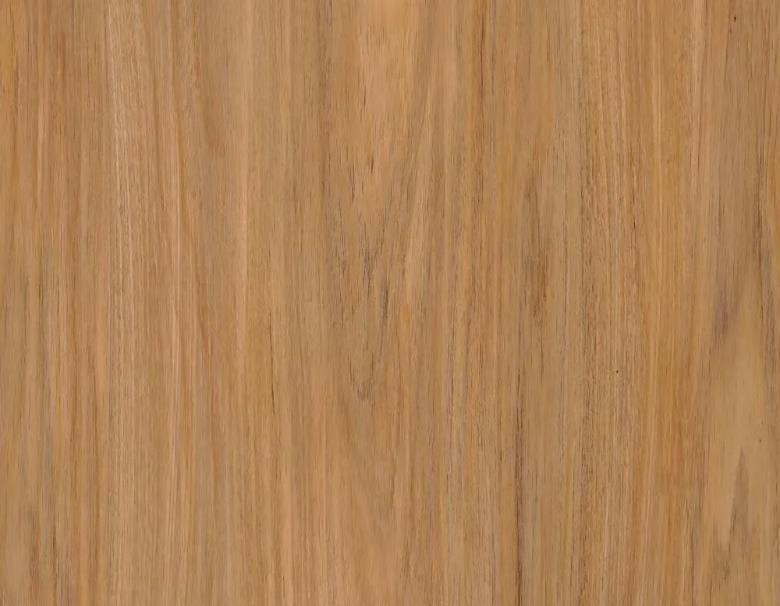
Yellowish beige to golden brown
Density
0.50 to 0.65 g/cm³
Uses
Fine and mid-to-high-end furniture, doors, window frames and wall paneling, decorative panels and interior woodworking, plywood and sliced veneers, moldings and trim, instruments and light turned pieces.
Grain
Generally straight
Conservation Passport
- CITES
- Not listed
- BRAZILIAN RED LIST
- Not on the official list
- LEGISLATION
- Not on the official list of threatened species: harvesting of native specimens only with an approved PMFS or a clearing authorization from the environmental agency, and transport with DOF (Sinaflor).
About the species
Freijó-verdadeiro has significant commercial value and broad industrial application, and is considered one of the main native woods used in Brazilian woodworking.
It is important to note that freijó-verdadeiro is often confused on the market with louro-pardo, although they are distinct species. Freijó-verdadeiro has the scientific name Cordia goeldiana and is a tree of the family Boraginaceae; its wood is a market classic, widely used in furniture and finishing. Louro-pardo has the scientific name Cordia trichotoma and also belongs to the family Boraginaceae, but botanically it is a different species.
Freijó-verdadeiro has consistent commercial value, broad industrial application and significant silvicultural potential, and is one of the main species for producing light-colored noble wood in Brazil.
It is known as a classic wood of Brazilian fine woodworking, with a strong historical and commercial reputation.
It has a golden-brown color and a decorative figure.
It is in high demand for high-end furniture and decorative veneers.
- Common names
Historical and cultural significance
– Freijó-verdadeiro (Cordia goeldiana) has great historical importance in Brazil as one of the most valued tropical woods of the Amazon, especially throughout the 20th century.
– It served as a substitute for scarce noble woods, thanks to its elegant decorative veining, good dimensional stability and high-quality finish.
– These characteristics made it an important alternative for woodworking and interior design.
– Between the 1960s and 1990s, with the expansion of the furniture industry, freijó was widely used to make residential and office furniture, doors and window frames, panels and wall paneling, and interior cladding.
– Thanks to its combination of lightness, stability and strength, the wood was also used in light aircraft components and replacement parts for wooden airplanes, as well as in musical instruments and technical objects.
– Its use helped consolidate furniture-making hubs and raise the commercial value of Amazonian woods.
– Freijó became an icon of Brazilian woodworking, widely used in custom furniture, panels and high-end finishes. Its light, elegant appearance is highly valued by architects and designers.
– To this day it remains one of the most valued woods in Brazilian design and architecture.
Botanical classification
- DOMAIN
- Eukaryota
- KINGDOM
- Plantae
- DIVISION
- Magnoliophyta
- CLASS
- Magnoliopsida
- ORDER
- Boraginales
- FAMILY
- Boraginaceae
- GENUS
- Cordia
- SPECIES
- Cordia goeldiana
Natural distribution

- States of occurrence
- Ecology and habitat
– Prefers deep, well-drained soils.
– Prefers a tropical to subtropical climate.
– Prefers good light after the juvenile phase.
– Regions of occurrence in Brazil: South / Southeast / Center-West / Part of the Amazon
– Biomes: Atlantic Forest / Seasonal Forest / Cerradão / Amazon edges
Tree morphology
- SIZE
-
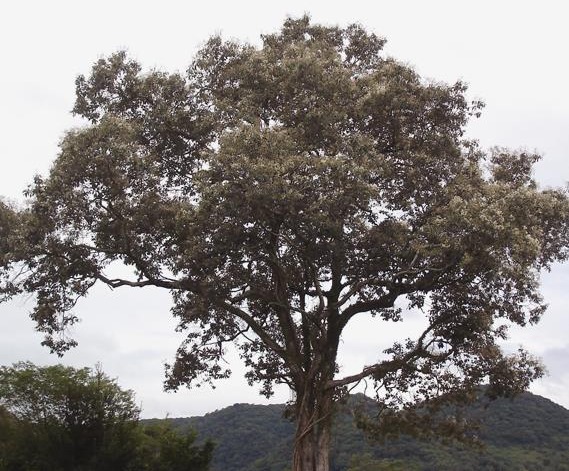
Medium- to large-sized tree, able to reach 20 to 35 meters in height.
Bole: Straight, cylindrical, with good commercial form. Produces long, clean boles with excellent industrial yield.
- BARK
- Gray to dark brown, fissured.
- CROWN
- Tall and relatively open.
- DBH
- 50 to 90 cm.
- LEAVES
- Simple, large, rough, pubescent.
- FRUIT
- Small drupe, dispersed by wind and wildlife.
Maturity and harvest
- Timeline · from seed to senescence
Economic harvest · 20 to 30 years in plantations, on average
under natural conditions, commercial trees are usually over 40 years old
Full maturity · 25 to 35 years
full wood maturity occurs, on average, between 25 and 35 years
– Freijó growth is moderate.
– Volume increment: Moderate.
– Management: Pure or mixed planting, responding well to thinning.
Wood characteristics
- HEARTWOOD
- Ranging from yellowish beige to golden brown.
- SAPWOOD
- Light yellow to beige, much lighter than the heartwood.
- TEXTURE
- Medium to fine.
- GRAIN
- Generally straight.
- Working properties
– Luster: moderate.
– Dimensional stability: good.
– Workability: excellent.
– Drying: easy, low incidence of defects.
– It has moderate natural durability and is best suited to interior use.
– A wood highly prized for its fine finish and decorative appearance.
– Density: Medium: 0.50 to 0.65 g/cm³.
– Hardness: Medium.
Wood uses
- Uses of the tree
– Reforestation
– Urban tree planting (in some regions)
– Native species with ecological value
Conservation and legislation
– Harvesting permitted only under authorized forest management.
– It can be included in native reforestation programs.
– Not listed in CITES Appendix I, but trade must comply with environmental legislation.
– Recommended good practices: sustainable management, forest replacement and FSC / CERFLOR certification.
Additional information
– Freijó shows good potential for reforestation and medium-term commercial timber production.
– High value in woodworking due to its stability, beauty and easy machining.