
- ATLAS OF WOODS
- Species Data Sheet
- ORIGIN: Atlantic Forest · Amazon · Pantanal · Cerrado (in wetlands)
Guanandi
- Calophyllum brasiliense
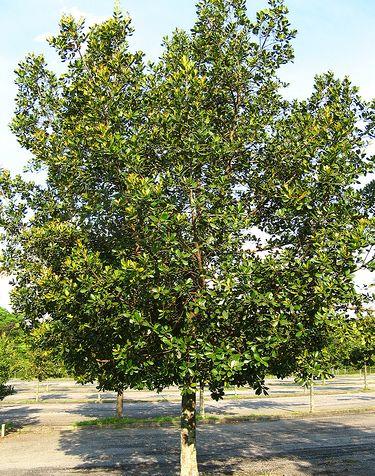
Guanandi is a tree native to tropical America, known for the quality of its wood and its great potential. It is one of Brazil's most promising species for reforestation, quality timber production and environmental restoration.
Family
Calophyllaceae
Color
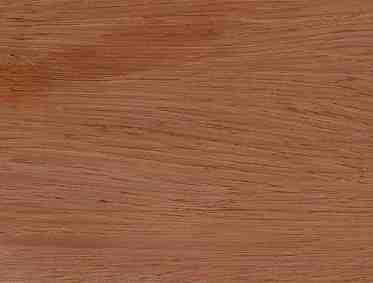
Pinkish brown to yellowish brown
Density
0.55 to 0.75 g/cm³
Uses
Furniture, joinery, building construction, flooring, wall paneling, window and door frames, and plywood.
Grain
Usually straight
Conservation Passport
- IUCN
- Least Concern (LC) · assessed in 2018
- CITES
- Not listed
- BRAZILIAN RED LIST
- Not on the official list
- LEGISLATION
- Not on the official list of threatened species: harvesting of native trees only with an approved PMFS or a clearing authorization from the environmental agency, and transport with a DOF (Sinaflor).
About the species
Guanandi (Calophyllum brasiliense) is a tree species native to tropical America, belonging to the Calophyllaceae family.
It is a species of great economic and environmental value, considered one of the main options for reforestation with native species in Brazil.
It stands out for its good-quality wood, its adaptation to different environments and its frequent use in reforestation.
It has ecological and economic importance in forest systems.
The genus Calophyllum includes several tropical species that produce wood and resins of economic value.
Guanandi has several common names in Latin America. The names may vary according to region and local tradition.
- Common names
Historical and cultural significance
– Guanandi has historical and economic importance in Brazil.
– Traditionally, the species is used for building construction, furniture making, carpentry, traditional medicine and commercial forest plantations.
– Today, it also stands out for its use in commercial reforestation, being considered a sustainable alternative to noble woods.
Botanical classification
- DOMAIN
- Eukaryota
- KINGDOM
- Plantae
- DIVISION
- Magnoliophyta
- CLASS
- Magnoliopsida
- ORDER
- Malpighiales
- FAMILY
- Calophyllaceae
- GENUS
- Calophyllum
- SPECIES
- Calophyllum brasiliense
Natural distribution

- States of occurrence
- Ecology and habitat
– It grows in moist soils, riparian forests, flooded or seasonally flooded areas, and poor, stony or flood-prone soils.
– Used in the restoration of degraded areas and in carbon credit projects.
– It is a hygrophilous species, with a great capacity for growth and for adapting to adverse environmental conditions.
– Biomes in Brazil: Atlantic Forest / Amazon / Pantanal / Cerrado (in wetlands)
Tree morphology
- SIZE
- Medium to large size, between 20 and 30 m tall. It is highly resistant to pests.
- TRUNK
- Straight and cylindrical.
- BARK
- Thick, dark brown in color.
- CROWN
- Dense.
- DBH
- 50 to 80 cm.
- LEAVES
- Simple, opposite, glossy.
- FRUIT
- Globose drupes containing a single seed.
Maturity and harvest
- Timeline · from seed to senescence
Economic harvest · 20 to 30 years
economic harvest age
Full maturity · 25 to 40 years
peak wood quality
– Guanandi grows moderately to fast.
– A species suited to commercial plantations of native timber, able to reach suitable dimensions in relatively short periods.
– Minimum cutting diameter: Approximately 50 to 60 cm.
Wood characteristics
- HEARTWOOD
- Pinkish brown to yellowish brown.
- SAPWOOD
- Light yellow, not very distinct.
- TEXTURE
- Medium to fine.
- GRAIN
- Usually straight.
- Working properties
– Workability: good.
– Mechanical strength and dimensional stability: good.
– Natural durability: moderate to high.
– Density: Medium to moderately heavy (0.55 to 0.75 g/cm³).
– Classification: It is classified as a semi-noble wood due to its good balance of strength, durability and commercial value; Even so, in some markets it may be considered a wood of high commercial value, especially from forest plantations.
Wood uses
- Uses of the tree
– Commercial reforestation
– Restoration of degraded areas
– Rural tree planting
– Production of medicinal oils
Conservation and legislation
– Its harvesting must follow Brazilian environmental law, sustainable forest management plans and timber harvesting regulations.
– The species is encouraged in native-species reforestation programs.
Additional information
– Guanandi has great economic and environmental potential, standing out for its good adaptation to different environments, its relatively fast growth and its wood, which performs well structurally and is versatile for many uses.
– Its fruits feed wildlife, supporting biodiversity.
– Its seeds yield a vegetable oil widely used in the cosmetics and pharmaceutical industries, which also works as an excellent carrier for essential oils.
– It is widely used as a sustainable alternative to more heavily exploited species.
– It is a wood that could be classified as noble in the context of forest management and sustainable reforestation of a medium-value tropical species.