
- ATLAS OF WOODS
- Species Data Sheet
- ORIGIN: Amazon
Maçaranduba
- Manilkara huberi
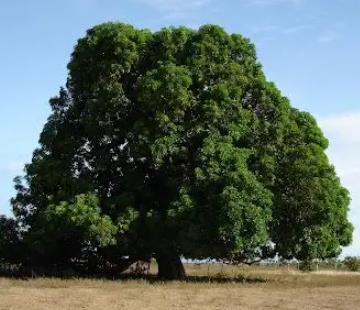
Maçaranduba is a large tree species native to the Amazon, whose wood is known for its high density, mechanical strength and durability.
Family
Sapotaceae
Color
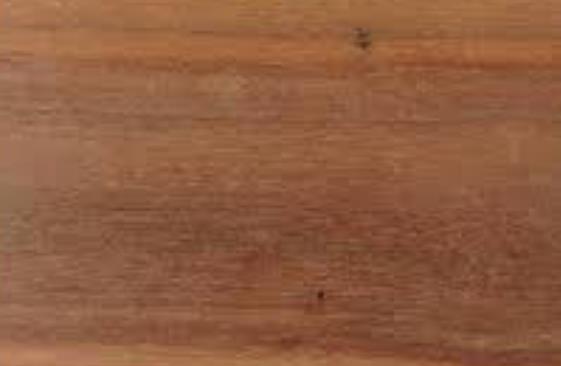
Dark red to reddish brown
Density
1.00 to 1.20 g/cm³ (approximately)
Uses
Heavy construction, hydraulic and marine works, piles and railroad ties, decks and exterior structures, industrial and high-traffic flooring, solid furniture, stairs, crossarms, utility poles and heavy shipbuilding.
Grain
Usually interlocked or straight
Conservation Passport
- CITES
- Not listed
- BRAZILIAN RED LIST
- Not on the official list
- LEGISLATION
- Not on the official list of threatened species: harvesting of native trees only under an approved PMFS (sustainable forest management plan) or a clearing permit from the environmental agency, and transport with a DOF (Sinaflor).
About the species
Maçaranduba (Manilkara huberi) has high commercial value and is widely used in structural applications and outdoor settings.
It produces a latex known as “balata,” historically used as a substitute for natural rubber.
Despite its relatively slow growth, it has high technical and commercial value.
Widely used in heavy construction, exterior works and applications with the most demanding mechanical and environmental requirements.
Extremely long natural service life, even without treatment.
- Common names
Historical and cultural significance
– Maçaranduba is economically relevant in the Amazon and has traditionally been harvested for both its wood and its latex.
– Widely used since the colonial period in heavy construction and shipbuilding.
– A classic wood for bridges, ports, piers and exterior structures.
– The tree’s latex was historically harvested as a substitute for gutta-percha.
– It became a symbol of extreme durability and natural resistance.
Botanical classification
- DOMAIN
- Eukaryota
- KINGDOM
- Plantae
- DIVISION
- Magnoliophyta
- CLASS
- Magnoliopsida
- ORDER
- Ericales
- FAMILY
- Sapotaceae
- GENUS
- Manilkara
- SPECIES
- Manilkara huberi
Natural distribution

- States of occurrence
- Ecology and habitat
– Prefers well-drained soils and terra firme (upland) forests.
– Environment: hot, humid climate.
– Ecological behavior: climax species, shade-tolerant when young.
– Other countries: the Guianas / Venezuela / Colombia / Peru / Bolivia
Tree morphology
- SIZE
-
Large tree, able to reach 30 to 45 meters in height.
Bole: Very straight, long and cylindrical, usually free of branches up to 20 m high.
Root system: Deep and very robust.
- BARK
- Thick, exuding latex.
- CROWN
- Large, rounded and dense.
- DBH
- 70 to 120 cm (old trees may be wider).
- LEAVES
- Simple, leathery, dark green and glossy.
- FRUIT
- Small, edible berries.
Maturity and harvest
- Timeline · from seed to senescence
Economic harvest · 40 to 60 years
average economic harvest age, which may vary with environmental conditions
Full maturity · 50 years or more
full maturity of the wood generally occurs after 50 years or more
– Maçaranduba grows slowly.
– The density and hardness of the wood increase with age.
– In native forests, commercial trees are usually more than 80 years old.
– Longevity: More than 200 years · a long-lived species that can live for more than 200 years
Wood characteristics
- HEARTWOOD
- Dark red to reddish brown.
- SAPWOOD
- Light pink, clearly distinct.
- TEXTURE
- Medium.
- GRAIN
- Usually interlocked or straight.
- Physical and mechanical properties
- JANKA HARDNESS
- Over 9,000 N (one of the hardest woods in Brazil)
- Working properties
– Luster: medium.
– Drying: slow, with a tendency to crack and warp if not properly managed.
– Mechanical strength: high.
– Natural durability: excellent.
– Impregnation: difficult due to its low permeability.
– Workability: difficult; requires sharp, powerful industrial tools.
– Excellent finishing, good gluing and excellent polishing.
– Because of the hardness of its wood, it is known as “bullet wood.”
– Structural stability: high.
– Density: Very high (approximately 1.00 to 1.20 g/cm³).
Wood uses
- Uses of the tree
– Besides its white latex, it produces fruit for direct consumption and local/regional food supply.
– Plays an important role in the ecosystem by feeding animals (fruit) and sustaining biodiversity.
– Contributes to forest structure and offers shelter and shade for wildlife.
– Used in Amazon restoration projects and in the recovery of degraded areas, as a long-lived, highly resistant native species.
Conservation and legislation
– Harvesting permitted only under authorized sustainable forest management.
– Not listed in CITES Appendix I, but trade is regulated.
– FSC / CERFLOR certification is recommended.
– Considered strategic for sustainable forest management.
Additional information
– Considered one of the most durable woods in Brazil, often compared to ipê and cumaru in structural strength.
– A tree of great ecological importance in the Amazon.
– A highly valuable wood for heavy engineering and harsh environments.
– Contributes to durable and environmentally responsible construction.