
- ATLAS OF WOODS
- Species Data Sheet
- ORIGIN: Cerrado · Seasonal Forest · transition areas with the Amazon
Sucupira-preta
- Bowdichia virgilioides
Sucupira-preta is a tree species native to Brazil, widely distributed across different biomes, whose wood is prized for its high mechanical strength, durability and density. Widely used in flooring, structures and furniture, it stands out for its long service life.

Family
Fabaceae
Color
Dark brown to almost black
Density
0.80 to 1.00 g/cm³ (approximately)
Uses
High-traffic flooring, heavy construction and framing, bridges, piles and foundations, railroad ties, exterior and rural structures, pieces subject to heavy wear and extremely tough furniture.
Grain
Interlocked
Conservation Passport
- CITES
- Not listed
- BRAZILIAN RED LIST
- Not on the official list
- LEGISLATION
- Not on the official list of threatened species: harvesting of native trees only under an approved PMFS (sustainable forest management plan) or a clearing permit from the environmental agency, and transport with a DOF (Sinaflor).
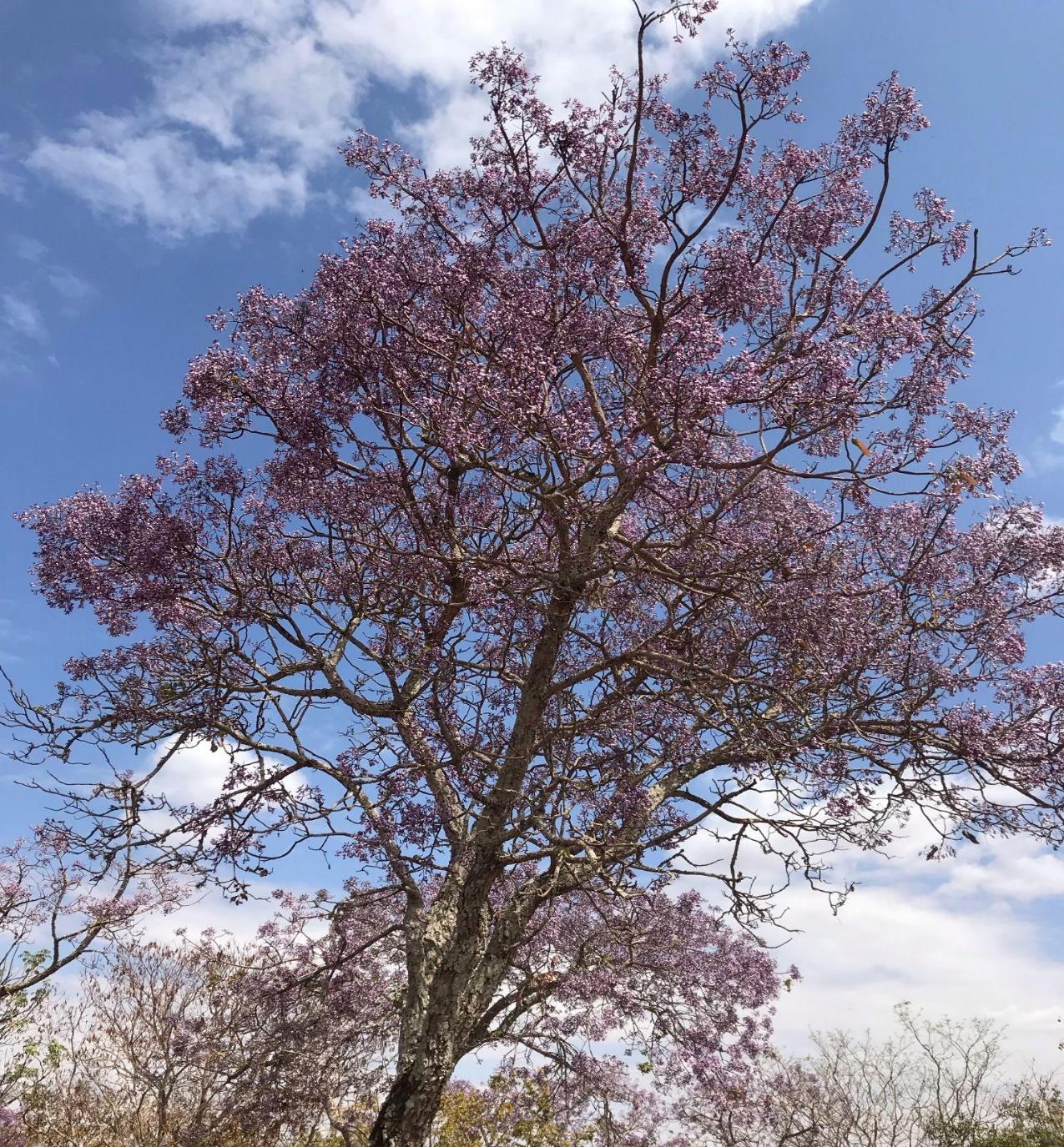
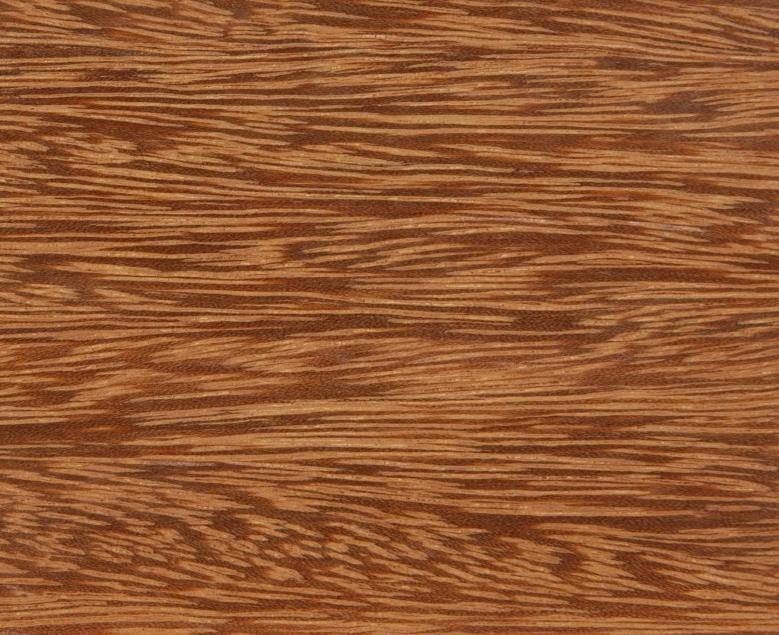
About the species
Sucupira-preta (Bowdichia virgilioides) has significant economic importance and is used both in building construction and in the production of structural pieces and furniture.
It is one of the strongest and most durable noble woods in Brazil, standing out for its high density, great mechanical strength and long natural service life.
Beyond its wood, the species is known for the traditional use of its seeds and bark in folk medicine.
- Common names
Historical and cultural significance
– Sucupira-preta is traditionally used in Brazil, both for the value of its wood and for its medicinal use in several regions.
– Historically used in heavy construction, framing and rural works.
– A wood prized for its extreme strength and durability, widely used in structures that require a long service life.
– Its seeds and bark are used in folk medicine (a traditional anti-inflammatory).
– Associated with sturdiness and longevity in Brazilian forest culture.
Botanical classification
- DOMAIN
- Eukaryota
- KINGDOM
- Plantae
- DIVISION
- Magnoliophyta
- CLASS
- Magnoliopsida
- ORDER
- Fabales
- FAMILY
- Fabaceae
- GENUS
- Bowdichia
- SPECIES
- Bowdichia virgilioides
Natural distribution

- States of occurrence
- Ecology and habitat
– Environment: well-drained soils; tolerates poor soils; seasonal climate.
– Ecology: late secondary species; drought-tolerant.
– Countries (tropical South America): Brazil / Bolivia / Paraguay / Venezuela / the Guianas
– Regions in Brazil: North (Amazon) / Center-West / Southeast
– Biomes: Cerrado / Seasonal Forest / Transition areas with the Amazon
Tree morphology
- SIZE
-
Medium to large tree, able to reach 15 to 25 meters in height.
Bole: Straight, cylindrical, good yield.
Root: Deep and strong. A robust species adapted to difficult environmental conditions.
- BARK
- Dark, thick, fissured.
- CROWN
- Moderately open and irregular.
- DBH
- 50 to 90 cm.
- LEAVES
- Compound, typical of a legume.
- FRUIT
- Flattened pod with hard seeds.
Maturity and harvest
- Timeline · from seed to senescence
Economic harvest · 30 to 50 years
average economic harvest age, which may vary with environmental conditions
Full maturity · Over 40 years
full maturity of the wood occurs at more advanced ages, generally over 40 years
– Sucupira-preta growth is considered slow to moderate.
– Natural harvesting: trees are usually mature.
– Management: tolerates adverse conditions and responds well to management.
– A dense wood associated with relatively slow growth.
Wood characteristics
- HEARTWOOD
- Dark brown to almost black.
- SAPWOOD
- Light and distinct.
- TEXTURE
- Medium to coarse.
- GRAIN
- Interlocked.
- Working properties
– Density: High (approximately 0.80 to 1.00 g/cm³).
– Hardness: Very high.
– Mechanical strength: Extremely high.
– Natural durability: Very high.
– Biological resistance: High against fungi, termites and moisture.
– Drying: Slow and careful.
– Workability: Difficult (very hard wood).
– Stability: Good for a heavy wood.
– A heavy structural wood with a long service life.
Wood uses
- Uses of the tree
– Use in folk medicine (the most important): seeds and bark are widely and traditionally used as an anti-inflammatory, analgesic and antirheumatic, especially for arthritis and rheumatism.
– Beekeeping (melliferous plant): produces flowers that attract bees; contributes to honey production; important for biodiversity and pollination.
– Environmental recovery: reforestation; recovery of degraded areas; adapts well to poor soils.
– Ornamental use: rural tree planting; naturalistic landscaping.
Conservation and legislation
– Harvesting permitted only under authorized sustainable forest management, with preservation of seed trees and appropriate harvest cycles.
– Trade regulated by environmental legislation.
– FSC / CERFLOR certification is recommended.
– Important for the conservation of the Cerrado and tropical forests.
– Sustainable management should be adopted.
Additional information
– Sucupira-preta has significant ecological importance, being adapted to poor soils and adverse climatic conditions.
– Considered a heavy structural noble wood because it is extremely strong and durable.
– Widely used in applications with high mechanical demands.
– High tolerance to adverse environmental conditions.
– An important species for ecological restoration.