
- ATLAS OF WOODS
- Species Data Sheet
- ORIGIN: Amazon
Tatajuba
- Bagassa guianensis
Tatajuba is a tree species native to the Amazon whose wood is widely valued for its high strength, durability and excellent performance outdoors. Its importance is mainly technical and structural rather than decorative.
Family
Moraceae
Color
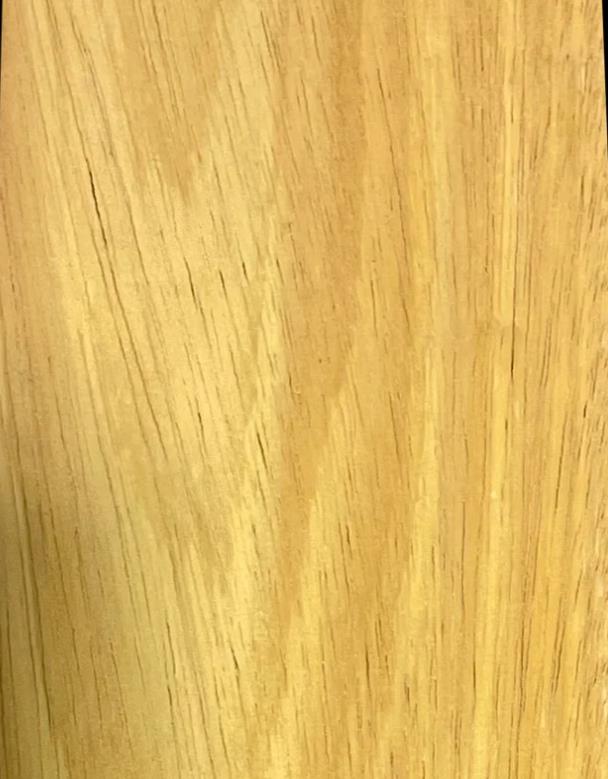
Deep yellow to golden
Density
0.75 to 0.90 g/cm³ (approximately)
Uses
Heavy construction, bridges and exterior structures, poles and piles, outdoor decking and flooring, shipbuilding, industrial flooring, beams and rafters.
Grain
Generally straight
Conservation Passport
- IUCN
- Least Concern (LC) · assessed in 2020
- CITES
- Not listed
- BRAZILIAN RED LIST
- Not on the official list
- LEGISLATION
- Not on the official list of threatened species: native trees may only be harvested under an approved PMFS or a vegetation-removal authorization from the environmental agency, and transport requires a DOF (Sinaflor).
About the species
Tatajuba (Bagassa guianensis) is a noble wood of high commercial value, often used as an alternative to ipê in structural and exterior applications.
Highly valued in heavy construction and structural carpentry, it is a traditional Amazonian wood with high, proven performance.
- Common names
Historical and cultural significance
– Tatajuba has been widely used in building construction and exterior structures because of the wood’s natural resistance.
– Riverside communities and traditional peoples have used, and still use, the wood for bridges, boats and rural structures.
– Its deep yellow color became a hallmark in the Brazilian timber market, valued in carpentry and regional architecture.
Botanical classification
- DOMAIN
- Eukaryota
- KINGDOM
- Plantae
- DIVISION
- Magnoliophyta
- CLASS
- Magnoliopsida
- ORDER
- Rosales
- FAMILY
- Moraceae
- GENUS
- Bagassa
- SPECIES
- Bagassa guianensis
Natural distribution

- States of occurrence
- Ecology and habitat
– Habitat: mainly terra firme tropical forests, preferring deep, well-drained soils.
– Countries (tropical South America): Brazil / the Guianas / Venezuela / Colombia / Peru / Bolivia
Tree morphology
- SIZE
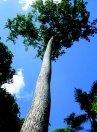
- Large tree, reaching between 25 and 40 meters in height.
- TRUNK
- Straight, cylindrical, with a long, clear bole.
- BARK
- Grayish brown, relatively smooth.
- CROWN
- Tall, broad and dense.
- DBH
- Often between 80 cm and 1.5 m.
- LEAVES
- Simple, large, rough to the touch.
- FRUIT
- Small and aggregate.
Maturity and harvest
- Timeline · from seed to senescence
Economic harvest · 30 to 50 years
average economic harvest age, which may vary with environmental conditions
Full maturity · After 40 years
the wood generally reaches full maturity after 40 years
– Tatajuba’s growth is considered moderate.
– Sustainable management is recommended because of high timber demand.
Wood characteristics
- HEARTWOOD
- Deep yellow to golden.
- SAPWOOD
- Pale yellow, poorly differentiated from the heartwood.
- TEXTURE
- Medium.
- GRAIN
- Generally straight.
- Working properties
– Density: Medium to high (approximately 0.75 to 0.90 g/cm³).
– Hardness: High.
– Natural durability: Very high (resistant to fungi, insects and moisture).
– Stability: Good.
– Workability: Moderate to difficult (hard wood).
– The wood is considered very strong and durable for exterior use.
Wood uses
- Uses of the tree
– Amazon reforestation
– Restoration of degraded areas
– Occasional ornamental use
Conservation and legislation
Additional information
– Tatajuba is often used as a substitute for denser woods such as ipê, thanks to its good balance of strength, durability and cost.
– A heliophilous species that needs good light to grow fully.
– A wood of distinctive color and great durability.
– Adapts well to deep, well-drained soils.
– High structural value for exterior applications.
– Economically important in the Amazonian timber sector.